







| As Featured In: |
|
|
Master the King of All Exercises
Deadlifting Secrets 101 Everything you need to know about this complex exercise. Free Video Training |
![]() Show and Go: High Performance Training to Look, Feel, and Move Better |
|||
Fitocracy: A Cool Online ResourceWritten on May 21, 2012 at 1:47 pm, by Eric Cressey One of the biggest mistakes I think I've made in my career is believing that I would be able to leverage all of my knowledge all the time. In other words, early on, I assumed that if I learned something and wanted to apply it with my clients/athletes, it would be as simple as writing it into a strength and conditioning program (or nutrition plan). This assumption (like most assumptions) was, of course, very flawed. You see, the concept of adherence was something I learned about through experience with a lot of people. Just because folks know that they should do something doesn't guarantee that they will do something. And, just because I was "Type A" and was always motivated to train regularly and eat right didn't mean that others were, too. Adherence is a reason people hire personal trainers, recruit workout partners, make bets with their buddies, enter "Biggest Loser" competitions, participate on online forums, hire hypnotists, and employ a host of other strategies. They know eating right and exercising are important facets of their lives, but they need outside influences to help make these things essential priorities. Enhancing adherence became a central strategy to the Cressey Performance business model, too; we wanted to make our facility an experience, not just a gym. We wanted folks to not just be accountable to their training partners and our coaches, but also be so damn excited to train that they wanted to kick the door to the gym down. To that end, when I learned about Fitocracy, I became immediately intrigued at their approach to enhancing exercise and nutrition adherence. They didn't just create an online social support network for exercisers of all ages and experience levels; they made tracking workouts fun and competitive (you earn points based on how challenging your workouts are). It is like a combination of: 1. Facebook (social support) 2. Twitter's (you pick what's applicable to you) 3. Words with Friends (compete against your friends) 4. Individual sports like powerlifting, distance running, etc. (compete against yourself) 5. Beer League Softball (bust your buddy's balls) Now, here comes the full disclosure: I liked this company and the adherence advantage it provides so much that I invested in it. Likewise, there are loads of well-known fitness professionals with strong presences at Fitocracy (even if they aren't investors). And, I think that you'll like it, too, so I wanted to encourage you to check it out - especially since it's free. In addition to what you see now (be sure to check out the iPhone app), there will be some cool stuff new coming in the months to come. For instance, I plan to start doing some live Q&A with followers on the site, and we'll be "bulking up" the exercise selection library. To learn more, head on over to Fitocracy through this link (if you sign up through this link, it will automatically make you one of my followers so that you'll hit the ground running). I'd also love to hear your thoughts on the site and your experiences with it in the comments section below. Sign-up Today for our FREE Newsletter and receive a four-part video series on how to deadlift! 5 Quick and Easy Ways to Feel and Move Better: Installment 3Written on May 18, 2012 at 8:30 am, by Eric Cressey Here are this week's random tips to get you headed in the right direction with your workout routine and nutrition program, with assistance from Cressey Performance strength and conditioning coach Greg Robins. 1. Take a preventative approach. Often times nagging pain, injuries, and adverse health effects are an issue of negligence. It is is important as a coach, athlete, or weekend warrior to take a preventative approach to keeping your body healthy. There is no shortage of information on how to deal with various joint pain, or why its important to do "this" to prevent "that". At Cressey Performance, we take a preventive approach to keep our athletes on the field, but the ball doesn't stop there. A common example is resistance training among older women to prevent bone degeneration. A recent study published in the European Journal of Applied Physiology found that younger women, in their mid twenties, who participated in a 12-week resistance training program showed significant increases in the hormones responsible for new bone growth. This isn't revolutionary, but the take home point is to promote heavy lifting long before signs of degeneration begin to present themselves. Similarly, anterior knee pain is a hot topic with active individuals. This pain can be debilitating, especially as an athlete or someone with a more active job / lifestyle. Another recent study conducted at The University of Cincinnati found that an intervention with four daily close chained kinetic exercises among military recruits (undergoing rigorous training) greatly reduced incidents of knee pain when compared to a control group who did not. Military personnel underwent daily physical training for 3-4 hours per day, including endurance marching, military field exercises, running, weapons and foot drill, and strength and conditioning. If as little as four exercises were able to help these individuals, imagine what they can do for you. 2. Eat more fish - and preferably ones that did cool stuff like this while they were still alive. 3. Wear a pedometer for a day. If you talk to a lot of people "in the know," non-exercise physical activity (NEPA) is an often overlooked factor contributing to fat loss success (or failure). Some people just move all the time, whether it's because of their occupation (e.g., manual laborer) or the simple fact that they are constantly fidgeting. It might surprise you, but this NEPA can really help get you lean - or keep you there. One quick and easy way to get a feeling of where you stand on this front is to simply wear a pedometer for a day. I did this about two years ago and discovered that I actually walk about four miles in eight hours of coaching at Cressey Performance. That's a lot of calories burned! Just like writing down everything you eat can force you to consider what you're putting in your mouth, wearing a pedometer can motivate you to take some extra steps each day. Give it a shot; you may be surprised at how many or few steps you take each day. 4. Count your blessings. Being happy, and finding fulfillment in your life and training, can be as easy as remembering all that you already have. Stop stressing about what you don't have, and focus on the many things you do have. Take five minutes and write down everything you are grateful for. Every morning start your day by reading through your list, and add to it as you see fit. Doing so will give you a positive start to each day. Try it out! 5. Be more specific with your "conditioning." The term conditioning is grossly misunderstood. The lack of understanding, in consideration of the demands of an individual within their chosen sports or activities, has led to many asinine training protocols developed by misinformed coaches and general people alike. An elite powerlifter may not be able to run a six-minute mile, but they are perfectly conditioned for their sport. Likewise, a baseball pitcher has no business doing extensive distance running when they a play a sport that involves covering as little as 100ft of total ground per outing (if that). More appropriately, they need to develop the energy systems conducive to producing explosive movements repetitively for the amount of time they spend on the mound. This will differ within the position as well: Starters, long relievers, closers, etc. Using resources such as "time motion analysis" is a great place to investigate the actual demands placed on an athlete in a given sport. You can access A LOT of these through a basic google search. As a team sport coach, take a critical look at what you assign as "conditioning" work to your athletes during practice. In this day and age, many kids are participating in strength and conditioning programs outside of their practice and game schedules. Assuming that they are receiving intelligent programming, you do not want to interfere with their training by having them do additional work that is detrimental to their progress. Solutions: stop the ridiculous amounts of distance running and "suicides," and instead form a relationship with their strength and conditioning coach. For you weekend warriors: Your approach to conditioning will be as specific as your main goal. Many general fitness people are kind of across the board on what they are trying to accomplish. With that in mind, try to keep a similar stimulus in your conditioning work to what the rest of your training for that day is. For example, place sprint work with adequate rest on heavy lifting days, place more aerobic work on off days, and include a day of high intense intervals with shorter rest later in the week after training. Co-Author Greg Robins is strength and conditioning coach at Cressey Performance in Hudson, MA. Check out his website, www.GregTrainer.com, for more great content. Sign-up Today for our FREE Newsletter and receive a four-part video series on how to deadlift! Strength and Conditioning Stuff You Should Read: 5/17/12Written on May 17, 2012 at 9:41 am, by Eric Cressey Here's this week's list of recommended strength and conditioning reading: The Coming Meltdown in College Education and Why the Economy Won't Get Better Anytime Soon - I stay away from politics with this blog, but this post from Mark Cuban was too good to resist - particularly because it was a great follow-up to my series, Is an Exercise Science Degree Really Worth It? In case you missed my previous articles, be sure to check out Part 1 and Part 2 of the series. I think it's a really important consideration in our field, where the average personal trainer makes less than $30,000, yet an exercise science degree can cost well over $200,000 even before student loan interest is included. I'd love to hear your thoughts. Advanced Rotary Stability Plank Progressions - Be sure to check out this post from Mike Reinold, where he outlines some great core stability exercise progressions, many of which can be found in our Functional Stability Training DVD set. The 10 Things Fitness Magazines Won't Tell You - I have gotten to work with Adam Bornstein quite a bit through both Men's Health and LiveStrong, and I like doing so because he isn't just a bright guy, but also a straight-shooter. This article demonstrates both! Sign-up Today for our FREE Newsletter and receive a four-part video series on how to deadlift! Tips for Long-Term Triceps HealthWritten on May 16, 2012 at 8:05 am, by Eric Cressey I’d wager that if you chatted with 100 lifters over the age of 30 with more than five years of strength training experience, they’d tell you that their triceps exercise selection has increasingly diminished with each passing year. It's sad and disturbing, but not unexpected. Barbell and dumbbell triceps extension variations can kill the underside of the elbows. Dips can irritate the medial aspect of the elbow in the bottom position, or just bother the AC joint at the shoulder girdle. Training the Rotator Cuff and Scapular Stabilizers SimultaneouslyWritten on May 14, 2012 at 6:44 pm, by Eric Cressey I'm always surprised when I see "arm care" portions of baseball strength and conditioning programs that attempt to break rotator cuff exercises and scapular stability exercises into different categories. In my eyes, while you can certainly prioritize one over the other, treating them as mutually exclusive means that you're missing out on a great opportunity to educate an athlete on "positional stability." Here are a few examples to demonstrate my point: In Band Distractions w/Rhythmic Stabilizations, you'll see that Orioles prospect (and Twitter phenom) Oliver Drake, actively counteracts the distraction force created by the band by pulling the scapula back onto the rib cage. Then, we challenge the rotator cuff with rhythmic stabilizations. Likewise, in this Half-Kneeling 1-arm Manual Resistance External Rotation, Sam needs to make sure to position the scapula appropriately on the rib cage to make sure that he's in the best position to create eccentric strength for the cuff. This is of particular importance in guys with low shoulders who may be very lat-dominant; gravity will have an additional downward pull on the scapula, so many guys need to intentionally activate upper trapezius prior to starting the set. Or, consider a Prone External Rotation (one of our old Strength Exercises of the Week). This is definitely viewed as a rotator cuff exercise, as the goal is to learn to externally the humeral head in the socket without the "ball" migrating forward (preventing anterior instability). However, you also have to appreciate that gravity is forcing the scapula forward into anterior tilt, so the lower trapezius must be turned on to counteract it. Likewise, just about every time you do any exercise that involves holding weights in your hands, your rotator cuff is firing reflexively. With all these examples - and surely many more - in mind, we realize that "categorizing" arm care exercises can be pretty difficult, as we're always looking to find a balance between doing enough and doing too much. Sign-up Today for our FREE Newsletter and receive a four-part video series on how to deadlift! 115 Ways to Improve Pitching VelocityWritten on May 11, 2012 at 9:33 am, by Eric Cressey Everyone wants to improve pitching velocity, but unfortunately, the answer to the question of "how" is different for everyone. To that end, I pulled together a quick list of 101 strategies you can use to improve pitching velocity. They aren't the same for everyone, but chances are that at least a few of these will help you. I'd encourage you to print this off and highlight the areas in which you think you can improve. 1. Optimize mechanics (this could be 100 more ways in itself; I will leave it alone for now). 2. Gain weight (if skinny). 3. Lose weight (if fat). 4. Get taller (shorter throwers can’t create as much separation, and are further away from homeplate) 5. Get shorter (taller throwers have more energy leaks). 6. Long toss. 7. Throw weighted baseballs. 8. Throw underweighted balls. 9. Improve thoracic spine mobility. 10. Improve scapular stability. 11. Improve glenohumeral joint stability (rotator cuff strength and timing). 12. Improve glenohumeral joint range of motion. 13. Regain lost elbow extension. 14. Improve hip abduction mobility. 15. Improve hip rotation mobility. 16. Improve hip extension mobility. 17. Improve ankle mobility. 18. Activate the deep neck flexors. 19. Extend your pre-game warm-up. 20. Shorten your pre-game warm-up. 21. Increase lower body strength. 22. Increase lower body power. 23. Train power outside the sagittal plane (more medicine ball throws and plyos in the frontal/transverse plane). 24. Speed up your tempo. 25. Slow down your tempo. 26. Get angrier. 27. Get calmer. 28. Get more aggressive with your leg kick. 29. Get less aggressive with your leg kick. 29. Don’t grip the ball as firm. 30. Throw a 4-seam instead of a 2-seam. 31. Get through the ball instead of around it. 32. Improve balancing proficiency. 33. Throw out all your participation trophies. 34. Do more unilateral upper body training.
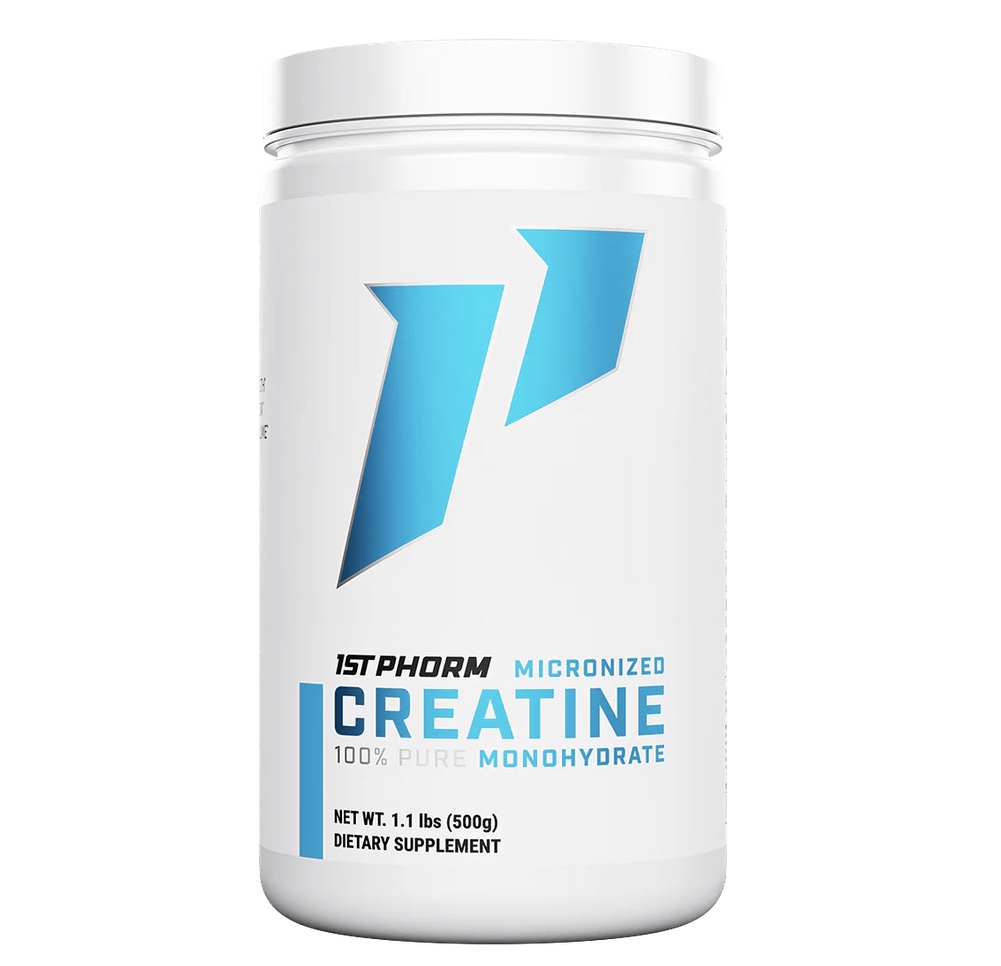
35. Recover better (shout-out to my buddy Lee Fiocchi’s Accelerated Arm Recovery DVD set on this front; it’s good stuff). 36. Throw in warmer weather. 37. Wear warmer clothing under your jersey. 38. Change footwear (guys usually throw harder in cleats). 39. Throw less. 40. Throw more. 41. Pitch less. 42. Pitch more. 45. Take all the money you were going to blow on fall/winter showcases and instead devote it to books, DVDs, training, food, and charitable donations. If there is anything left over, blow it on lottery tickets and sketchy real estate ventures, both of which have a higher return-on-investment than showcases in the fall and winter. 46. Switch from a turf mound indoors to a dirt/clay mound outdoors. 47. Get a batter in the box. 48. Get more sleep. 49. Sleep more hours before midnight. 51. Improve glute activation so that you can fully extend your hip in your delivery. 52. Stop thinking that the exact workout a big league pitcher uses is exactly what you need to do. 53. Subcategory of #52: Remove the phrase "But Tim Lincecum does it" from your vocabulary. You aren't Tim Lincecum, and you probably never will be. You can learn from his delivery, but 99.9999% of people who try to copy his delivery fail miserably. 54. Read more. This applies to personal development in a general sense, and baseball is certainly no exception. The guys who have the longest, most successful careers are usually the ones who dedicate themselves to learning about their craft. 55. Stay away from alcohol. It kills tissue quality, negatively affects protein synthesis, messes with sleep quality, and screws with hormonal status. 56. Incorporate more single-leg landings with your plyos; you land on one leg when you throw, don't you? 57. Be a good teammate. If you aren't a tool, they'll be more likely to help you when you get into a funk with your mechanics or need someone to light a fire under your butt. 58. Respect the game. Pitchers who don't respect the game invariably end up getting plunked the first time they wind up going up to bat. Getting hit by a lot of pitches isn't going to help your velocity. 59. Train the glutes in all three planes (read more HERE). 60. Remember your roots and always be loyal. You never know when you'll need to go back to ask your little league, middle school, high school, or AAU coach for advice to help you right the ship. 61. Get focal manual therapy like Active Release. 62. Get diffuse manual therapy like instrument-assisted modalities or general massage. 63. Make sweet love to a foam roller. 64. Throw a jacket on between innings to keep your body temperature up. 65. Pitch from the wind-up. 66. Drink magical velocity-increasing snake oil (just making sure you were still reading and paying attention). 67. Pick a better walkout song. 68. Get on a steeper mound (expect this to also increase arm stress). 69. Train hip mobility and core stability simultaneously. 70. Get around successful people in the pitching world and learn from them. Find a way to chat with someone who has accomplished something you want to accomplish. If you hang around schleps who complain about their genes and have never thrown above 75mph, though, expect to be a schlep who throws 75mph, too. 71. Pick the right parents (sorry, genes do play a role). 72. Recognize and get rid of pain. 73. Throw strikes (more balls = higher pitch count = lower average velocity) 74. Get 8-12 weeks off completely from throwing per year. Read more about why HERE and HERE. 76. Brawl with Robin Ventura (okay, don't do that - especially if you aspire to play for the White Sox someday). 77. Stop thinking so much. 78. Think more. 79. Stop stretching your throwing shoulder into external rotation (read more on that HERE). 80. Get in a better training environment. 81. Surround yourself with unconditionally positive and supportive people. 82. Talk to a different pitching coach to get a new perspective. 83. Stop talking to so many pitching coaches because too many cooks are spoiling the broth. 84. Lengthen your stride (learn more HERE, HERE, and HERE). 85. Shorten your stride. 86. Get your ego crushed when you realize that no matter how strong you think you are, there is a girl somewhere warming up with your max. And, my wife might even be able to do more pull-ups than you! 87. Stop trying to learn a cutter, knuckle-curve, slider, and “invisiball” when you can’t even throw a four-seam where you want it to go. 88. Play multiple sports (excluding cross-country). 89. Stay healthy when other pitchers are getting hurt. 90. Stop pitching for five different teams in the same season. 91. Pre-game routine: dynamic warm-up, sprinting progressions, long toss, pull-down throws, flat-ground, bullpen. Post-game routine: make out with prom queen after complete game shutout. 92. Do rhythmic stabilizations before you throw (if you’re a congenitally lax/”loose” guy) to "wake up" the rotator cuff. 93. Hydrate sufficiently. 94. Quit worrying about the damn radar guns. 95. Wear a posture jacket/shirt. 96. Drink coffee or green tea (you get antioxidants and a decent caffeine content without all the garbage in energy drinks). 97. Get in front of a big crowd. 98. Find a better catcher. 99. Throw more to and get comfortable with the same catcher. 100. Tinker with your pre-throwing nutrition to ensure consistent energy levels. 101. Tinker with your during game nutrition to sustain your energy better. 102. Tinker with your post-game nutrition to recover better. 103. Improve core stability (more specifically, anti-extension and anti-rotation core stability). 104. Breath better (less shoulder shrug and more diaphragm). 105. Train the rotator cuff less. 106. Change the day on which you throw your bullpen. 107. For relievers, stay loose and warm throughout the game (read more about that HERE). Staying entertained is also important, as CP athlete Joe Van Meter demonstrates. 108. Here and there, between starts, skip your bullpen and throw a flat-ground instead to give your arm a chance to bounce back. 109. Consider creatine (the most researched strength and power supplement in history, yet surprisingly few people in baseball use it) 110. Work faster (the fielders behind you will love you). 111. Work slower (recover better between pitches and self-correct). 112. Stop ignoring your low right shoulder and adducted right hip. 113. Pick a college program where you’ll have an opportunity to play right away and get innings. 114. Move from a 5-day rotation to a 7-day rotation. 115. Decide to wake up in the morning and piss excellence! These are really just the tip of the iceberg, so by all means, feel free to share your own strategies and ask questions in the comments section below. Sign-up Today for our FREE Baseball Newsletter and Receive a Copy of the Exact Stretches used by Cressey Performance Pitchers after they Throw! Strength and Conditioning Stuff You Should Read: 5/9/12Written on May 9, 2012 at 7:19 pm, by Eric Cressey Here's this week's list of recommended strength and conditioning reading: Elite Training Mentorship - I just had some new content loaded here for one of our twice-a-month updates. My two in-services, Progression and Regression and Understanding and Managing Acromioclavicular Joint Issues will be of particular interest. Trunk Stability for Young Athletes - Mike Robertson did a great job with this post on preparing today's young athletes without skipping steps. Understanding USA Hockey's American Development Model (ADM) - This is an excellent post from my friend (and former CP intern) Kevin Neeld. I love how Kevin has sought out to be "the guy" when it comes to hockey much like we have done so in our work with baseball players. I also really enjoyed this post, because I think we can learn a lot on long-term development models by looking to the successes and failures encountered in other sports. In particularly, I loved his quote, "We're winning the race to the wrong finish line." Sign-up Today for our FREE Newsletter and receive a four-part video series on how to deadlift! 5 Quick and Easy Ways to Feel and Move Better: Installment 2Written on May 8, 2012 at 9:02 am, by Eric Cressey I'm excited to announce that new Cressey Performance employee Greg Robins is going to be helping me out with this series moving forward. Greg brings a unique skill set to to the table, and I think that the two of us together will kick out some great content in this weekly post moving forward. With that said, here are five quick and easy ways to feel and move better to get you week off on the right foot: 1. Focus on less. Too often I see people make the mistake of doing too much in the gym. Additionally, many folks jump from strength and conditioning program to program, or change strength exercises too often. Make it a point to do two things. First, pick a few big movements that you can execute correctly, and continually work to become great at them. Second, settle on a specific outcome for your training. Are you trying to lose fat, gain muscle, or get strong? While your approach may have elements that address all of these, prioritize one or the other for an extended period of time. Allowing yourself time to get better with movement, and eliminating competing demands from your program, are both great ways to maximize your efforts. 2. Declutter your life. "Spring cleaning" is a hackneyed expression, but that doesn't mean it isn't an incredibly worthwhile project to undertake! Let's just say that I filled a trunk with trash from my home office last week. Considering that my home office is only 13'x13', I expect my productivity to increase quite a bit. Think about ways you can "declutter" your life; it should help you focus on the task at hand. 3. Carry heavy stuff with friends. Dan John has put out some great content with respect to how valuable carrying variations can be. They are easily learned, don't make you ridiculously sore, and provide a great whole-body training effect. One thing we like to do as a staff is set up our farmer's walks in a group format. Our turf is 40 yards long, and each set is either one or two trips. One person goes, then the next person goes, and so on until everyone has finished all their sets. It keeps you accountable to strict rest periods, builds in the motivation of competition (who wants to be the one guy who can't finish his trip?), and distributes the loading/unloading responsibilities among several people! Here's an old video of us on this front: 4. Get every rep. Nobody makes progress by missing lifts. Check your ego at the door, and take a more patient approach to your training. The most beautiful lesson in training is one of delayed gratification. To succeed in the gym, you need to do what is necessary in the training session in order to make the subsequent training sessions beneficial. Nobody can set personal records for themselves every day, so focus on executing each and every rep smoothly. Over time, add to the bar, add a rep, or do a little more work in the same time period. It will all add up, and a year from now you will marvel at what you accomplished. However, if you choose to blow it out every session, in a year, you will be lucky to have made minimal progress. 5. Spend less time down at the bar. It drives me bonkers when lifters spend too much time down in the bottom position of a deadlift. I always encourage people to get their minds right while they're standing around, and then get right to it when they get up to the bar. Spending too much time in the bottom position of your deadlift technique means that you'll lose any benefit of the stretch-shortening cycle, and run the risk of becoming an overly pensive, weak schmuck.
Co-Author Greg Robins is strength and conditioning coach at Cressey Performance in Hudson, MA. Check out his website, www.GregTrainer.com, for more great content. Sign-up Today for our FREE Newsletter and receive a four-part video series on how to deadlift! Rocket Science Alert: Strength Training for Pitchers STILL Improves Throwing VelocityWritten on May 7, 2012 at 8:54 am, by Eric Cressey With an old post, Strength Training for Pitchers, I *thought* I had put to rest the silly idea that strength training doesn't help with improving throwing velocity. Unfortunately, some pitching gurus are still insisting that weight training is the devil when it comes to pitching velocity. To that end, I thought I'd use today's brief post to highlight some newly published research from (among others) the bright folks at the American Sports Medicine Institute (ASMI). This research showed that strength training doesn't just improve throwing velocity, but also that ANY type of strength training does! Researchers looked at the effects of three different six-week strength training programs on velocity in 14-17 year-old baseball players, and found that all three programs led to significant improvements (1.2-2.0%) in throwing velocity over controls. And, as is usually the case in the research, the programs were less than comprehensive. Just imagine if you borrowed the best bits and pieces from several programs and put them together in a comprehensive program that lasted an entire career, rather than just six weeks! So, the next time you hear a pitching coach say that strength training for pitchers doesn't work, please rock a "face palm" and then inform him that even crappy strength training works in most scenarios (especially high school athletes). Sign-up Today for our FREE Baseball Newsletter and Receive a Copy of the Exact Stretches used by Cressey Performance Pitchers after they Throw! How to Measure Volume in Strength and Conditioning ProgramsWritten on May 4, 2012 at 1:56 pm, by Eric Cressey During my first ever live Facebook Fan Page Q&A last night, I received the following question, and wanted to use today's post to expand on it: Q: How do you go about measuring volume in strength and conditioning programs? I feel like it's glossed over in a lot of textbooks and courses when it comes to programming. A: This is an incredibly tough question to answer - and trust me, it's a question I've given a lot of thought! Early in my career, I tried to come up with elaborate equations to calculate volume, but it was tough for a number of reasons (many of which I discuss in my e-book, The Art of the Deload). First, not all exercises are created equal. A curl can't be weighted the same as a deadlift variation, for instance. The more joints an exercise involves and the greater the distance the bar travels, the more stressful it is. Many people will make the argument that because one can use more weight on the deadlifts than the curl, the total volume (total reps x load) takes care of itself. The problem is that it doesn't take into account the distance the bar travels or the amount of muscle mass involved. Let's say a lifter can deadlift 500 pounds, quarter-squat 500 pounds, and barbell supine bridge 500 pounds. I can guarantee you that the 500 pound deadlift takes of a toll on the body than the other two because there is greater amplitude required and muscle mass recruited. The "total tonnage" argument is a sound one, but not a perfect one. Second, all volume isn't created equal. Imagine having three crazy stressful training sessions back-to-back-to-back on Mo-Tu-We, then four days off. Then, take the exact same training loads, but space them out Mo-We-Fr. I guarantee you that the body's perception of the stress of the third session will be far greater in the first scenario - which to me is the important reason we consider volume in the first place. Timing and overlap matter. Third, let's say that you go in to the gym fresh and squat on the first day of the training week. We'll say that you do four sets of five reps at 315 pounds for a total tonnage of 6,300 pounds. Then, exactly one week later, you go in and do 15 sets of lower-body training, and then go and squat at the end with the goal of getting that 6,300 pounds of "volume" again. Since you're exhausted, you need to do ten sets of two reps instead. Wouldn't that volume of squatting hit you like a ton of bricks? The duration of the session and your accumulated transient fatigue changed the game. Fourth, not all lifters are created equal. At a body weight of 185 or so, I hit a 660 deadlift, and after I this lift, my entire body hated me for about a week. My wife (an optometrist) freaked out when she saw that I'd bursted some small blood vessels in my eyes and face (it actually looked like I had freckles for about four days). As I recall, I did about two sets of lunges after this pull before realizing that I should shut it down for the day. I wasn't hurt; I was just exhausted. Conversely, for a 1000-pound deadlifter who outweighs me by 150 pounds, this is speed weight. And, to really exaggerate my point, imagine a brand new female lifter who is learning to deadlift with the training plates (10 pounds/side = 65 pound deadlift). If she does a whopping 11 reps (65lbs x 11 = 715 lbs), she'll have accumulated more volume than I did on this day. In short, "appropriate" volume is 100% specific to the lifter's experience, age, gender, training goals, fatigue status, injury history, competing demands, and a host of other factors that I didn't even cover! That said, when it really comes down to it, it's just something you learn in time by observing, writing, and trying out hundreds/thousands of programs. It's like a sixth sense for me by now. I will, however, make one observation that never seeks to amaze me: I'm always surprised at how much volume it takes to attain a level of fitness, but how little volume it takes to maintain that level of fitness.To that end, most strength and conditioning coaches devote their entire career to finding a good mix of a number of factors to offer clients and athletes a great training effect, but we'll never know what an "ideal" mix of these factors is simply because factors like volume can be so cumbersome to interpret. For that reason, writing strength and conditioning programs will always be as much art as it is science. Sign-up Today for our FREE Newsletter and receive a four-part video series on how to deadlift! |
|