Usually, my "random thoughts" series focus on anything from corrective exercises to sports performance training. However, given the release of my buddy John Romaniello's great new fat loss resource, The Omega Body Blueprint, I figured I'd throw out 15 thoughts on the subject of leaning out. Here goes!
1. We often hear about how the average American consumes a certain amount of <insert unhealthy food or beverage here> each year. What I'd be curious to hear is how much of the excess consumption comes from "nibbles," "tastes," "bites," and "samples. In other words, I'd be willing to bet that people are getting a lot of extra calories with quick tastes throughout the day - whether it's a "preview" taste of whatever they're cooking, finishing a child's meal, or trying a sample of a product as they walk through the grocery store. I'd be willing to bet that just removing these tastes from one's diet would make a significant difference in portion control for the average person who struggles with his/her weight.
2. There's been some research on how sleep deprivation can lead to weight gain, but I don't think it's gotten the attention it deserves. As such, I'll put it out there right here: poor sleep quality absolutely has a profound effect on body composition! Take it from a guy who has six month old twin daughters at home; the past six months have been "eye opening" from a training results standpoint, too!
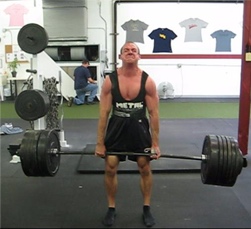
This obviously happens predominantly through endocrine mediums that modulate appetite and where we store calories; this has been well established in research on night shift workers in the past. However, we can't overlook the indirect impact it has on training quality in a more experienced athletic population. If you're chronically sleep deprived, it's going to impact your performance in the gym. I, personally, found that while my "peak" fitness levels didn't fall off, my ability to display them consistently did. In other words, as an example, I could still go out and deadlift 600+ pounds, but I couldn't do it as often or as predictably. Over time, those hills and valleys add up to a detraining effect.
Additionally, when you're dragging and crunched for time, there is a tendency to cut corners on everything from warm-ups to finding quick pick-me-ups like energy drinks. This is a very slippery slope.
3. I've never bothered to confirm that the numbers are right on the money, but over the years, I've heard that 80% of North Americans are chronically dehydrated, and that dehydration is the #1 cause of daytime fatigue. If these are, in fact, true, how come nobody ever highlights drinking more water as a means of improving fat loss efforts? It improves satiety and "displaces" calorie-containing beverages - and that's on top of helping to optimize exercise performance and "normal" health factors. I wish more folks would look to water as a "magic pill" over anything they can buy on the shelf of a supplement store.
4. Fat loss is pretty simple, until you're 90% of the way to your goal. After that, EVERYTHING matters: macros, hormones, programming, timing, and a host of other factors. This was a key point John Romaniello makes in his new e-book. You wouldn't take your Ferrari to a mechanic who specializes in working on Honda Civics, so you need to make sure you seek out expertise from people who have actually helped people to finish that final 10% on the way to the goal.
5. Everyone has a few foods that they find irresistible - food that they always eat if they're in the house. If you're trying to drop body fat, before you take any other steps, you need to get these foods out of the house. The goal should be making "cheating" as difficult to accomplish as possible. For me, it's natural peanut butter.
6. A lot of people can only train three times per week - and that's totally fine. With that said, I'm still largely in agreement with Dr. John Berardi's observation that the most fit people you'll encounter get at least six hours of exercise in per week. In other words, if you've only got three hours to work out each week, your training definitely better be dense; you need a lot of volume and relatively short rest intervals. Don't expect to be in phenomenal shape doing a 3x5 program MoWeFr unless you have an awesome diet and are really busting your butt working hard during those three sessions.
7. When it comes to athletes, gradual reductions in body fat are the name of the game. You see, often, body weight – and not body composition – are what predicts their success. Pitchers are a perfect example; I’ve seen many who have just indiscriminately lost body weight, only to see their velocity drop considerably. This may come from the actual loss of body mass, the increased training volume that caused it, the type of training (extra aerobic activity?), or – most likely – a combination of all these factors. One thing is for sure, though: dramatic weight reductions rarely work out really well.
8. One of the biggest complaints of folks on "diets" (as much as I hate that term) is that healthy food gets too bland. Without even knowing it, a lot of them start adding sauces that are loading with extra calories, usually from sugar. Nobody ever seems to recognize that BBQ sauce and ketchup can be loaded with sugar, for instance.
Fortunately, a quick solution is to encourage them to gravitate toward using spices and herbs over sauces to add some flavor to meat and vegetables. I love turmeric, sea salt, and pepper on my eggs, as an example.
9. Avoiding liquid calories is the still, in my opinion, the biggest dietary game-changer most folks in the general population can implement. I wish I could go back in time and eliminate every soda I drank as a kid.
10. There is an inverse relationship between strength preservation and conditioning intensity during a fat loss training phase. In other words, if maintaining strength is a high priority, you'd be wise to leave the aggressive interval training out - and instead opt for lower-intensity supplemental conditioning. Obviously, this means results will come a bit slower - but you'll hold on to your hard-earned strength gains more easily.
11. My business partner, Pete, told me a funny story the other day, and I thought I'd share it here as a good fat loss lesson.
Pete did his first "big" presentation - to an audience of about 150 fitness professionals - last month. As luck would have it, he wears a watch that also tracks his heart rate - and Pete happened to glance down at it right before he went on stage to present. His resting heart rate is normally in the 55-60bpm range - and it was up over 120bpm at that moment!
Obviously, this is a specific challenging, unfamiliar incident that can get heart rate to spike. However, there are people out there who respond to most challenges like this; they are constantly "wired" throughout the day. This obviously has both short- and long-term health impacts, and you can bet that if you're always on edge, it's going to be a lot harder to lose body fat.
We don't have the option of just removing stressors from our lives, but we can change the way we respond to them. A few coping strategies to keep you mellow and unconditionally positive in the face of adversity might just help to get/keep you lean, too.
12. Speaking of stress, I'm a firm believer that sometimes, when it comes the war on excess body fat, we need to look at reducing stressors before we look to add stressors (via exercise and caloric restriction). Think about it: if you have a busy, overweight executive who is sleeping four hours a night and crushing terrible fast food, is the first priority to put him on a crazy high-volume exercise program? Shouldn't we try to add some quality sleep, better food, a little massage and/or meditation, and a moderate exercise program from which he can bounce back? In other words, isn't it a better bet - both for short-term health and long-term adherence - to "normalize" routines before getting on a crazy routine?
13. If you want to understand fat loss, you need to understand insulin management. For the real geeks out there, check out this paper I wrote for an exercise endocrinology course back in graduate school. There were enough references in there to last me an entire career...
14. It's very easy to fall off the bandwagon on the nutrition front when you're on vacation. If you're only going on 1-2 vacations per year, this probably isn't a big deal. However, if you're someone who travels extensively and does a lot of weekend trips, these dietary missteps can add up. Vacations are extra challenging because they often include all-you-can-eat buffets, plentiful dessert choices, and lots of alcohol. You'd be amazed at how easy it is to pack away 5,000 calories in a day if you're having two big ol' strawberry daiquiris while on the beach, and then enjoying a slice of cheesecake and two glasses of wine with dinner.
The last thing I would ever tell our clients to do is avoiding "indulging" while on vacation, so my strategy has always been to simply encourage them to get some exercise in first thing in the morning on half the days they're on vacation. In addition to the short-term metabolic benefits it yields, an exercise session has a way of keeping people accountable to their diets so that they avoid going overboard. If you work out early in the day, you're more likely to go grab a healthy breakfast - which will help to limit caloric intake later in the day. And, you're less likely to have that extra glass of wine at 11pm if you know you're going to be in the resort's health club at 8am.
Of course, this is coming from a guy who took a TRX to Costa Rica for his honeymoon, so take my recommendations with a grain of salt!
15. I'm constantly amazed at how many calories I need to eat to maintain my body weight - and I don't consider myself an ectomorph, by any means. In fact, I'm probably more toward the endomorph ends of the spectrum. What separates me from the rest of the endomorph population in this regard? To me, it's two things:
a. I eat a very clean diet - which means I need a greater quantity of food.
b. My daily non-exercise activity level is pretty high, as I typically walk 4-5 miles per day while coaching on the floor. I'm also not very good at sitting still, whether it's tapping my foot while I'm working on the computer, or constantly bouncing around the house doing different things. I'm actually more stressed when I'm sitting still!
To this end, I think most folks who struggle with their weight need to find ways to add a bit more movement to their daily lives. Wearing a pedometer can be a great initiative in this regard.
In wrapping this article up, if you're looking from some direction from a guy who has put far more time and effort into learning about the rhyme and reason for optimal fat loss approaches, I'd encourage you to check out John Romaniello's new resource, The Omega Body Blueprint. It's on sale for 50% off through tomorrow (Saturday) at midnight, and I really enjoyed going through it.
Sign-up Today for our FREE Newsletter and receive a four-part video series on how to deadlift!
All things held equal, if you want to continue to improve over the course of a training career, you need to progressively increase the training stimulus. While increasing the weight used is the most well known way of progressing, increasing training density is another means of making things more challenging. In other words, you need to do more work in less (or the same amount of) time.
To that end, here are some of my favorite strategies for making your training more dense. As you'll notice, some of them are as much "mindsets" as they are actual programming strategies.
1. Be accountable to rest intervals.
Here's the breakdown of a typical powerlifting training session:
a. Lift something heavy over about 10-15 seconds.
b. Sit around cracking jokes with your training partners over about 8-10 minutes.
Repeat "a" and "b" over the course of about an hour, then do some assistance exercises and go home.
Obviously, I'm embellishing things - but not by much! I can't say that I know of many powerlifters who rigidly adhere to rest intervals - and I'm not saying that they necessarily should. However, their approach can certainly impact how "everyone else" trains in a trickle down effect, so I do think it's important for the general fitness enthusiast to be cognizant of monitoring rest intervals. If you're not careful, you can easily get distracted and wind up wasting too much time between sets.
2. Remove distractions.
This goes hand-in-hand with point #1, as distractions compete with sticking to rest intervals. However, I think it's one thing to just procrastinate before the next set, but another thing altogether to actually get distracted by something. This might be checking your cell phone, or striking up a conversation with somebody when you know you've only got 20 seconds left before the next set needs to start. Clear out the distractions if you're trying to make your training more dense.
3. Minimize variety.
I'm normally a huge believer in variety in a training program, but when you're trying to make your training more dense, variety is actually your enemy. You see, the more variety you work into a training program, the more set-up that's required. We never realize that we might spend 10-15 minutes of every training session setting up equipment and loading/unloading plates. If you want to get a lot of volume in over a 45-60 minute period, you can't spare that 10-15 minutes. In other words, the "densest" sessions might only include four different exercises, as opposed to 6-8.
4. Don’t be afraid of drop-offs in loading.
This is another mindset note. Many individuals - myself included - absolutely hate having to drop the weight from one set to the next. However, unless you've undershot your initial weight selections, it's pretty much inevitable when you're doing several sets of higher reps. If you want to be successful with density-based training programs that involve higher-rep sets and shorter intervals, you'll have to eat a bit of humble pie when the loading starts dropping off.
5. Incorporate back-off sets.
I discussed "back-off" sets in my previous article on the stage system. While they can be used for training strength and power, the real density benefits come with respect to accumulating volume - whether it's to increase muscle size or help with fat loss. Adding in back-off sets of 6-20 reps after your heaviest strength work can quickly increase the density of your overall training sessions.
6. Don't think that increasing high-intensity density work will yield as great an energy expenditure as increasing moderate-intensity density work.
This example might seem complex, but it won't be after this example.
Imagine you can deadlift 400 pounds, and you want to get more density in your program. Let's say that you can hit 90% of 1RM (360 pounds) for a single every 60s for ten minutes - for a total workload of 3,600 pounds.
Let's say that in this same time, you could hit a set of five reps at 75% of 1RM (300 pounds) every two minutes. That's a total workload of 7,500 pounds.
The point is that more reps - even with a noteworthy drop in intensity - will always "outdo" lower-rep work - even with more sets - when it comes to increasing the total amount of work in a given session. In other words, use your strength work to build or test strength, not to try to make for a more dense training session. Otherwise, you wind up getting stuck in a tough middle ground where you aren't building strength optimally, and really aren't making your training any denser.
7. Position exercise pairings in close proximity to one another.
If you pair up a front squat and a chin-up in the same power rack, you can get a lot of volume in without having to move around the gym at all. Conversely, swap those chin-ups for a lat pulldown, and there's a lot more walking involved. This is an especially important consideration in a commercial gym where someone might jump in on a piece of equipment while you're a few feet away.
Sign-up Today for our FREE Newsletter and receive a four-part video series on how to deadlift!
While this digital resource has been used by folks of all walks of life for everything from fat loss to athletic performance training , in light of an email I received the other day from my buddy, Kevin Neeld, I thought I'd highlight the strength increases aspect of things. Kevin is director of athletic development at a strength and conditioning facility in Sewell, NJ - and I sent him an advanced copy of Show and Go. Here's what he sent me the other day:
"Eric, I wanted to let you know that I put our whole staff on your Show and Go program and the result [after just a month] has been:
Matt Siniscalchi-405 x 5 (Personal Record)
David Lasnier-385x5 (Personal Record)
Kevin Neeld-425 x 5 (Personal Record)
"I also front squatted 285 for 3, which is pretty good for me. Turns out your programs work! I've been pumping Show and Go's tires a lot around here since you launched it. Hopefully the program is getting the attention it deserves."
Then, a day later, a few days later, I got another email:
"We just did the front squat 1RM test; here were some results:
David Lasnier - Front Squat (295 - PR)
Kevin Neeld - Front Squat (315 - PR)
"You should also know that David and I both tied/set PRs during our 1-RM bench press test too...but we were both SO sore from the previous upper-body lift that we didn't even bother shooting film. I think we'll both beat our previous bests by 10-15lbs in a couple weeks when you have the next 1RM built in. Thanks!"
Today, I’m featuring an interview Tom Venuto did with Cheat Your Way Thin author Joel Marion, as it’s a great interview that delves into the science of leptin and how it can be strategically manipulated for fat loss – even if it’s during the holiday season.
Tom: Cheating on your diet to lose more weight seems counterintuitive if not utterly illogical, but depending on how you approach it, I’m in complete agreement that there’s a strong argument for it from two different angles – psychological and physiological. What do you think are the psychological benefits to the dieter allowing cheat days as opposed to being 100% strict on your diet?
Joel: First, it absolutely increases adherence across the board, there’s no getting around that. It makes ―dieting‖, a concept which generally (and absurdly) demands that people forgo their favorite foods for months and months at a time, actually livable, and more importantly ENJOYABLE.
I was actually just talking about this with another trainer the other day. For most people, Day 1 of a diet—when they finally buckle down and decide they need to go on one—is the worst day of their life. It’s depressing. ―No pizza, for like, 3 months while I attempt to lose this 30 lbs. Yeah, right. Anyone who thinks that’s actually going to happen is completely deluded and this is exactly why 99% of people fail with restrictive dieting.
Two, let’s say you do cheat (not strategically) and eat something you’re not supposed to while dieting. Guilt, failure, and a slew of other feelings that you should NEVER have to feel while on a diet surface and make you feel as though you ―just don’t have it in you or that you lack willpower or that you don’t have what it takes to stick with a program and achieve your goals. That’s terrible.
Flat out, dieting, in the calorie restrictive, self-sacrificing manner we have learned it, is flat out unrealistic for the vast majority of people. If you told me I had to give up pizza for 3 months to get lean, I’d be one fat dude. The trade off isn’t worth it, and neither are the painfully slow results that most ―diets yield.
Tom: On the physiological side, there are a lot of benefits to “cheating” after a period of restrictive dieting. There’s a lot going on in the body when you do this, but much of it seems to revolve around one hormone, leptin. Would you explain in as simple terms as possible for the layperson, what is leptin?Joel: Leptin is awesome (or at least when you know how to manipulate it, it is). Get on its ―bad side, however, and you’re pretty much doomed to be overweight.
In the simplest terms, leptin is a hormone that communicates your nutritional status to the rest of your body. From there, your body then makes decisions on what to do with things like fat burning and metabolism, based on the messages it’s receiving from our friend leptin.
High leptin levels = heightened fat burning and metabolism
Low leptin levels = decreased fat burning and metabolism
There’s a little more to it than that, but you asked for simple terms.
Leptin has also been deemed the ―anti-starvation hormone, which is essentially is its major function in the body, to prevent, or at least dramatically slow the negative adaptations (from a survival standpoint) when food is scarce or when energy intake drops substantially (i.e. starvation). This was great for our hunter and gather ancestors, but terrible for the dieter.
And while dieting certainly isn’t as extreme as starvation, it really is nothing more than a lesser degree of exactly that, carry slightly lessened, but still very troubling consequences for the dieter.
Getting into some of the research on leptin, research has shown that after only seven days of calorie restriction, leptin drops on average 50% -- putting you at roughly 50% of your fat burning potential. That’s after only ONE week. And as long as you continue to fail to provide your body with the energy it’s hoping to receive, adaptations get worse, leptin falls harder, and metabolism takes an even greater hit.
The good news is, it only takes one day of ―overfeeding‖ or ―cheating‖ to bring leptin levels back to baseline and restore things like plummeted thyroid hormones, fat burning enzymes, a manageable (not insatiable) appetite, and metabolism overall.
The problem with overfeeding, however, is that if you fail to properly set up the rest of the diet in an extremely strategic manner around a cheat day or overfeed day, overfeed days can backfire and lead to a one-step-forward one-step-back phenomenon. This is something we cover heavily in Cheat Your Way Thin—the ideal way to set up the other 6 days each week, based on a plethora of research, to ensure that each cheat day accelerates, not detracts, from progress.
Tom: Are you saying that you can significantly manipulate leptin with nutritional intervention, including cheat days, and that if we can scour the research and make a punch list of things that keep leptin levels as normal as possible and prevent leptin from dropping like it would with a linear low calorie or low carb diet, this is going improve our results?
Joel: Absolutely, no question about it. Keeping metabolism consistently high and avoiding the negative hormonal adaptations of dieting equates to better, faster results; there’s no way around that.
That’s in addition to the psychological/adherence benefits, which obviously, if you’re actually still doing the diet 6 or 8 weeks into the plan, you’re going to experience infinitely better results than if you quit after two weeks every time.
Tom: Are you claiming that these techniques will actually increase fat loss, or simply prevent the bad stuff that happens with restrictive dieting, like the adaptive decrease in metabolism and the increase in appetite, which could then lead to plateaus? I think this is an important distinction.Joel: Preventing the bad stuff = increasing the good stuff (i.e. fat burning). If your metabolism slows, that means you are burning fewer calories, right? So for instance, let’s say your BMR was 2000 cals/day when you first started dieting, and then through restrictive dieting over a period of a month or two (and the subsequent decrease in leptin and metabolism), you’re now only burning 1500 cals/per day.
If you had kept leptin ―happy through strategic cheating and metabolism did NOT drop off, you’d still be burning an extra 500 calories a day. Do you think that burning an extra 500 calories a day is valuable in terms of faster fat loss? Without question.
Essentially, by ―preventing the bad things from occurring, you automatically and absolutely increase fat loss beyond what would be possible without taking measures to manipulate leptin and keep metabolism at its height, week to week. Simply put, use strategic cheating in the proper way, and by the end of each week you’ll have lost more fat than if you simply chose to remain ―strict seven days a week. That equates to increased fat loss any way you look at it.
Tom: I’ve been looking at some research that says some folks have plenty of leptin but they also have leptin resistance. I haven’t seen many people really address this leptin resistance issue aside from saying it exists. Do you think this is a common problem and does your program offer any insights into the causes as well as solutions?Joel: Okay, the other thing I didn’t mention while trying to give you the ―simple definition earlier was that leptin levels aren’t just mediated by calorie intake alone—they’re also affected by the amount of body fat you are carrying.
High levels of body fat = high levels of leptin
Low levels of body fat = low levels of leptin
Now, from everything I said earlier, that makes it sound like fat people with high levels of body fat should actually be the leanest people around if leptin actually made a difference (and lean people should be gaining weight like nobody’s business, because of extremely low leptin levels).
This is where leptin resistance and leptin sensitivity come in. Similar to insulin resistance, if leptin receptors are constantly being bombarded by high levels of leptin, they start to become less sensitive to the hormone. This is what happens with insulin in Type II diabetics. People eat crap food and loads of highly processed carbohydrates for years, flood their bloodstream with insulin every hour of the day, and gradually over time insulin receptors become so desensitized to the hormone to the point that insulin no longer ―works.
It’s the same with leptin. Overweight people, who have been overweight for years, become resistant to the hormone because of massive amounts of leptin (caused by high body fat levels and high calorie intakes) slamming receptors for extended periods of time.
On the other hand, lean people can get by with lower levels of leptin, relatively speaking, because their receptors are extremely sensitive to the hormone. It’s important to note, however, that this is relative to the person and their individual ―baseline levels of leptin when food intake is normal.
For example, let’s say, and I’m just pulling out a totally arbitrary number for simplicity’s sake, a particular person with a low level of body fat has a baseline level of leptin is ―10 (I’m leaving out the μg/L units of measure left and all that jazz for simplicity as well). ―10 is all this person needs for normal metabolic functioning to occur because they are highly sensitive to leptin. On the other hand, ―10 wouldn’t be nearly enough to maintain normal metabolism for a much larger, and subsequently less leptin sensitive individual. So, you can see what I mean when I say that it’s all relative.
Another important thing to note is that calorie restriction lowers leptin independent of body fat. So, let’s say this same person from above went on a diet. And they’re leptin levels went down to ―5. Sure, they’re very sensitive to leptin, but ―5 ain’t going to get the job done even for them. When leptin levels fall below baseline levels, whatever baseline levels are relative to the person, negative metabolic adaptations occur.
Getting back to leptin resistance, there’s good news and there’s bad news. The good news is that it’s totally reversible, but the bad news is that someone who has been overweight for years (and is thus probably leptin resistant) can’t just jump right into a full-out strategic cheating and carb-cycling program and have it be effective—simply put, in this case, the dietary strategies we use to manipulate leptin wouldn’t really be of use to them because they’re resistant to the hormone and it’s not going to matter if we’re doing all these different things to manipulate leptin—they already have plenty of leptin running around.
For this person, the focus would then be on reversing the leptin resistance and restoring leptin sensitivity, and that is done one way: clean eating + exercise, and yes, with a moderate calorie restriction. Pretty much all the same dietary measures one would take to increase insulin sensitivity (clean eating, low-carbs, low-glycemic carbs, etc).
Carbohydrate intake also affects leptin levels, so someone is this position would certainly want to avoid highly processed carbs or anything that is going to give leptin a significant spike.
I generally recommend 2-3 weeks of lower-carb dieting (with strategic cheating interspersed) before beginning with the full blown program, and that’s actually the purpose of the ―priming phase of the Cheat Your Way Thin program. For the Cheat Your Way Thin Holiday Edition, we also included some other leptin resistance reversing strategies as well (still allowing for plenty of holiday cheating).
Tom: I’ve found a lot of evidence to suggest that an overweight person and an already lean person have some significant physiological differences that can influence how they respond to a particular diet. Do you suggest a different approach for the overweight person and the already lean dieter who is trying to get even leaner (for example a bodybuilder or figure competitor)?
Joel: In addition to what I’ve mentioned above, I’ll say this. The leaner you get, the more leptin becomes a limiting factor and the more you have to do to manipulate it. Because of this, we often increase the frequency of cheat days to once every 5 days for very lean individuals, or even every 4 days in some extreme instances like with bodybuilders or figure competitors prepping for a show. Some advanced diet and exercise strategies are also needed to make that type of frequent approach work.
Similarly, for the very overweight person, when we first transition them to using strategic cheat days, we may start with a cheat day once every 9 or 10 days, as opposed to once a week.
For the vast majority falling in between these two extremes, however, the once per week approach works best (and is great for consistency as cheat days always fall on the same day each week allowing people to plan their cheat day around whatever day is generally their most social day of the week).
Tom: I’m a firm believer in cycling calories up and down and doing that by manipulating carb intake which I call carb cycling, for many of the same reasons that you have a cheat day. Over the years, I’ve seen a lot of different ways to carb cycle, like 5 days keto and 2 days of high carb, the rotation of high, low and medium days, and various mixtures of high and low carb days. What is your basic methodology for introducing the higher calorie cheat days and why do you prefer your method over some of the other ways that people do carb cycling?
Joel: As for methodology, it’s based on the research I shared earlier that leptin falls off by about 50% after only one week, while only taking one day of ―overfeeding or ―cheating to ramp levels back up to baseline. So this is the basis of the weekly cheat day.
That said, we actually do use carb cycling in addition to Cheat Days to make the program even more effective, but carb cycling alone, unless you are doing very high calorie ―refeed days, while somewhat effective, not as effective as combining both or using all-out cheat days.
I’ll explain the reason and necessity for the weekly carb cycling in a bit.
Tom: Your method seems complicated with high glycemic index/glycemic load days, low carb days and cheat days and all kinds of phases. If your goal is to increase adherence by allowing cheat meals, then wouldn’t creating a complex system of high, low, cheat, and various GI level days just create the opposite effect and lower adherence?
Joel: People have reported, a thousand times over, that it’s actually the easiest diet they’ve ever done, and not only because of the cheat days, but because of the wide variety of foods that you’re allowed to eat even on ―diet days.
We go low-carb after a cheat day and then pretty much every day we add foods to the ―allowed list. This isn’t hard to do, there is no calorie counting, and with every day you just get to eat more than you did yesterday. That’s a pretty easy diet to stick to. And oh yeah, once a week you get to eat whatever you want. I don’t think it gets easier.
In the manual, I list it out in the easiest way to understand possible, and after a week or two on the diet the entire system become second nature in which people don’t have to even think about it whatsoever.
On low carb days you eat steak, fish, eggs, and plenty of veggies, on low GI days you fill up on things fruit and legumes, and for higher GI days you’re allowed to have pasta, bread, potatoes, rice, etc. Of course there are a lot more options than just those foods, but that’s the gist of it…you just climb the GI scale throughout the week.
It’s not complicated at all once people read through the program, and even less complicated when they actually start doing it.
Tom: I’ve been following the research on glycemic index/glycemic load and weight loss with great interest. It seems, at least if you go by what the peer-reviewed research says, that GI is a useful tool for blood sugar management, which is what it was originally intended for, but when calories are matched evenly, there’s little or no impact of GI on weight loss. Are you familiar with these studies, and if so then why do you emphasize GI and GL so much in your program?
Joel: Yes, I’m familiar, but here are a couple things to consider. One, these weight loss studies are performed with people adhering to the same typical calorie restrictive, 7-days a week of dieting approach that I adamantly preach against, because it’s ineffective. There is no calorie cycling, carb cycling, or strategic cheating involved. Needless to say, simply manipulating GI in this instance isn’t going to make a big difference.
Beyond that, let’s say that GI really didn’t matter even when adding a weekly cheat day. That would be valid data if you were consuming the same basic diet the other 6 days of the week, but that’s not what we do with Cheat Your Way Thin.
Allow me to make an analogy. Let’s say my employer pays me one of two ways – my pay for a full week once a week on Friday, or my pay for one day, every day. At the end of the week I make the same amount of money with either approach. But is there a difference in the impact of each payment method? Absolutely.
With the once a week approach, my pay day is a much bigger event, I have enough money to make a larger purchase, or go out for a higher-end dinner. With the every day approach, not so much. I make the same amount of money each week, but it never quite ―feels like a have a lot of money in my hands.
Well, we treat our use of the GI system the same way. If I just prescribed the same diet every day, it probably wouldn’t make much of a difference, but that’s not how I use GI and GL. Instead, we line up carb intake strategically to create little "paydays": spikes and jumps and high points in insulin throughout the week, and that strategic use makes an impact. Now, you’re probably thinking, "why would we want to spike insulin throughout the week?" That’s a good question.
The reason is, I’ve read through quite a few VERY intriguing papers that show the number one influencer of leptin is insulin, and this supercedes the actual calorie content being consumed. There was actually one study – and your eyes are really going to be opened with this one – that monitored leptin levels of fasting individuals. Naturally, leptin crashed pretty hard, but then they did something else. They gave each subject an IV drip of insulin to maintain normal blood insulin levels, and even though they were consuming ZERO calories, leptin levels were maintained.
That’s the power of insulin in this scenario, and exactly why we cycle carbohydrates in the fashion we do. We start off the week low-carb when leptin is high after the cheat day along with strategically time exercise to accelerate progress. Then, mid-week, when leptin starts to fall off from the low cals and carbs, we reintroduce low GI carbs for an insulin boost. Then, later in the week, as leptin begins to fall again, we add starchier, higher GI carbs for an even greater boost.
Every single day is set up in a strategic way to manipulate leptin and maximize the benefits of the Cheat Day.
Tom: Is there any reason that the cheat day has to be “junk” food? Call me crazy, but I don’t like eating a lot of junk. Give me two cheat meals a month and I’m completely satisfied, I swear, I just want the option to eat what I want occasionally. In fact, I usually feel like crap after I have a huge junk meal, let alone an entire junk food day. Would a guy like me get the same effect, from a physiological point of view by carbing up / refeeding on potatoes, yams, rice, oats and maybe some pasta? Is there any reason eating more clean food won’t have the same effect as junk food?
Joel: A clean ―carb reefed does not have the same benefits and is not as effective; we actually tried it many, many times with clients, comparing results with the ―all-out approach, and strictly from fat loss standpoint the all-out approach produces better results every time.
Now, that is not to say that you need to eat ―junk food, but rather that you just need to understand why ―junk food works so well for our purposes, and then replicate those reasons with cleaner items.
French fries, pizza, ice cream, pastries, etc, all combine two things very well—very high glycemic carbohydrates and fats. That is the winning combo.
Carbohydate + fat produce a synergistic insulin response beyond what is possible when just using carbs.
And you need to go HIGH GI—yams and oats are OK as part of the day’s menu, but you really need to go higher GI than this. Throw in some bread, the rice and pasta are good, maybe some crackers, Gatorade, etc. Bottom line, high GI carbs + fat wins out.
Tom: To what degree is your varied carb approach simply a way to manipulate calories? With so much focus on carbs and glycemic index, do you see a danger that people are going to start to fear carbs or consider carbs fattening, when its really just a caloric deficit we’re trying to achieve, isn’t it?
Joel: The calorie stuff is actually just a side-effect, after-effect, or added ―”bonus” of what we do with carbs, not the main or intended effect we are trying to achieve, which again are the insulin spikes throughout the week.
Yes, the calorie cycling does help a bit indirectly, but I even mention in the manual that this is not the main reason for the staggered carb set up.
Tom: I’m sure you’ve heard this one before, but I have to ask. Do you see any potential downside of allowing an entire “eat whatever you want” cheat day, as opposed to doling out individual cheat meals? In particular aren’t you concerned about people overeating, losing track of calories and setting themselves backwards? If you give permission to your clients to go wild and eat whatever they want on cheat day, I know some dudes that would make an all-you-can-eat buffet go out of business.
Joel: Yes, and I’m one of those dudes. The fact is that it works the way it is. I haven’t met anyone who can really overeat the cheat day to the point that it sets back progress if they strategically follow the way I set up the rest of the program. It just doesn’t happen. And this is coming from a guy who orders a 48 oz steak when I go out to a steak house, along with appetizers, salad, soup, family-size sides, and dessert.
The only ―stipulation I put on the cheat day is that you do not eat to the point of discomfort. Eat until you are full, but that’s it. Then wait until you are hungry again until you eat. If you are leaving the table saying ―I ate too much‖ or if you’re feeling sick, or if you have to lay down because you over-did it, that’s where you know you’ve gone overboard, and that’s really the only way people are going to overdo the calories.
As for the recommendation of doling things out to individual cheat meals, that does NOT work to bring about the physiological changes (increasing leptin, etc), which is the number one reason we use cheat days. The psychological stuff is a nice added benefit, but it’s a side-effect of the physiological benefits we are aiming to gain from each cheat day.
Cheat meals are great as a psychological vent, but that’s about it. Research has very clearly shown that prolonged overfeeding over the course of a day (and not a single meal) is necessary to restore leptin levels to baseline.
Tom:Thanks, Joel. This has been on extremely informative interview
Today marks the release of Joel's Cheat Your Way Thin Holiday Edition. Check it out at a huge discount through this Friday, November 19, at midnight HERE.
Here are a few blasts from the past that you definitely ought to check out:
Lower Back Pain and the Fitness Professional - It's amazing how many fitness professionals know NOTHING about lower back pain even though it will occur at one point or another in every single one of their clients.
Can Little Leaguers Strength Train? - It's a question I get all the time - and this was my first response to the inquiry a few years ago. I updated this and got a bit more detailed and geeky in a follow-up, The Truth about Strength Training for Kids.Solutions to Lifting Problems - This T-Muscle article is a must-read for anyone who wants to be able to stay the course even when setbacks occur along the resistance training journey.
Lastly, for those who are looking to shed some pounds over the holidays while everyone else is packing 'em on, check out these two free Holiday Fat Loss special reports from Joel Marion. Joel's got some quick and easy to apply tips you can put to use right away.
Sign-up Today for our FREE Newsletter:
As a lot of you probably know, I'm pretty much known as a "baseball training guy" - and rightfully so, as about 80-85% of our athletes at Cressey Performance are baseball players.
Most people are surprised to find that I really never played baseball at a high level. While I was super active in it growing up (my mother jokes that I actually taught myself to read with baseball cards), I actually had to give baseball up at the end of eighth grade so that I could focus on tennis, my "stronger" spring sport. And, to take it a step further, when high school ended, I went off to college in 1999 fully expecting to become an accountant. Seriously.
Around that same time, though, I had some health problems - and my shoulder was already a wreck from tennis. Those factors "beckoned" me to a healthy lifestyle - and that's when I made the decision to transfer to an exercise science program and focus on my new passion as a career. I did a double major in exercise science and sports/fitness management, and took part in internships in everything from personal training to cardiac and pulmonary rehabilitation.
When I headed off to graduate school in 2003, I anticipated going in to the research world. About a month after I arrived on campus at UCONN, though, I caught the strength and conditioning bug and was hooked - for life. Interestingly, though, in those first few years, I really didn't work with baseball much at all.
It wasn't until I got out in to the "real world" that I just happened to start working with a few high school baseball players when I first moved to Boston. They were great kids, and I had a lot of fun training them - and they got great results that drew a lot of attention to the work I did with them. I was already a big baseball fan, and given my history of shoulder problems, I really enjoyed learning everything I possibly could about arm care - so it was a great fit.
The rest, as they say, is history. We now have 44 professional baseball players from all over the country here to train with us at Cressey Performance because they believe our expertise, environment, systems, and passion give them the best opportunity on the planet to be successful in their baseball careers. I have guys who swear by my resistance training, medicine ball, mobility, soft tissue, movement training, and throwing programs even though I never even played a single game of high school - let alone collegiate or professional - baseball. I've found my niche - but as you can tell, I never forced it.
What do you think I would have said if you had asked me in 1999 what my ten-year plan was? I would have told you that I'd be filing tax returns in early April, not following all our athletes on opening day around the country.
And, if you had asked me in 2004 what my five-year plan was, I'd have told you that it was to become a great muscle physiology research. I probably would have commented on how cool it was that the Red Sox won the World Series for the first time in 86 years - but wouldn't have had the foresight to note that I'd someday go on to train two guys from that roster who have 2004 world championship rings.
My point is that you can't force a fitness niche; you have to discover and then develop it. A lot of stars had to line up the right way for me to get to where I am with working with a baseball population, but as Thomas Jefferson once said, "I find that the harder I work, the more luck I seem to have."
Getting sick forced me to learn how to better take care of my body - and that led me to the fitness industry and strength and conditioning.
Having shoulder pain motivated me to learn more about shoulder health.
Being a "non-baseball guy" growing up forced me to do a lot more listening than talking with our athletes early-on, as I had to learn their culture. It also put me in a position to never accept stupid training principles (like distance running for pitchers) simply because they were "tradition" - because crappy training was never a "tradition" that I'd learned.
If I'd purposely gotten sick, whacked myself in the shoulder with a sledgehammer, and then read every book on baseball tradition that I could, do you think I'd be where I am today? If you answered "yes," put down the glue you're sniffing and start reading this again from the top.
Every business consultant in the fitness industry raves about how important it is nowadays to get a niche. Train middle-aged female fat loss clients only. Or, maybe it's 9-12 year-old kids. My buddy Eric Chessen even works exclusively with fitness for kids in the autism spectrum. I agree completely with these consultants' advice - but your appropriate niche won't magically appear unless you experience a lot of different settings and find the right fit for you, then follow up on it by educating yourself as much as possible by reading/watching everything you can, expanding your network of colleagues, and finding solutions to problems others haven't been able to solve.
If you are going to do something exclusively, you better be:
a) passionate about it
b) good at it
c) sure that it alone can financially support you
d) excited about the possibility of becoming an expert and contributing to the existing body of knowledge in that realm
e) willing to potentially pass up on opportunities in other realms
To be very candid, I just don't think that having specific 5- and 10-year plans is necessarily a good idea. Sure, it's okay if we are talking about financial planning, marriage, etc. - but when it comes to professional goals, there are just too many factors that can change things on a dime and turn you in a new direction. I love what I do now, but couldn't tell you for the life of me where I'll be in 5-10 years - and I happen to think that I have a pretty good grasp on where I'm going, as compared to the rest of the fitness industry. If I was just leaving college today, I'd definitely be taking it one day at a time!
How about you? What's your niche - and how did you discover and develop it?
Related PostsWant to be a Personal Trainer or Strength Coach? Start Here.7 Steps for Attacking Continuing Education in the Fitness IndustryHow Do You Find Time for Everything?
I often get questions on what the best approach for fat loss is - and the truth is that there is no one correct way. Everyone responds differently, and different fat loss programs have different outcomes for different people. That said, I wanted to outline two resources and the population to which they appeal the most.
First, for the general fitness "Joes" (and "Janes") that read this blog, I wanted to give a shout-out to Dr. Kareem Samhouri's Double-Edged Fat Loss program , which is a resource that I'd highly recommend if you (or a family member or friend) is someone who is new to exercise and looking for a program that can deliver excellent results without much equipment. It certainly isn't right for everyone (particularly a lot of the hardcore fitness enthusiasts and fitness professionals) reading this blog, but Kareem definitely offers an excellent resource to those who need help getting the ball rolling on an exercise program and want to do so without a ton of equipment. He's also a great dude and an excellent motivator, so I think you'll find it to be good reading, should you make the investment. Click here for more information and to see if it's a good fit for you.
Second, for the fitness professionals out there, Alwyn and Rachel Cosgrove recently introduced an online education series, Counting Reps to Counting Revenue, about how they have built up their gym, Results Fitness, which is arguably the most profitable gym per square foot in the country. What does this have to do with fat loss? Well, the fat loss market is their bread and butter - so you can't have a successful business model without a successful training model. For more information, click here.
I hope you all had a great weekend. I'll be back tomorrow with more fresh, new content.
Sign-up Today for our FREE Newsletter and receive a four-part video series on how to deadlift!
Today, we're fortunate to have an interview with Chad Waterbury.EC: Chad, thanks for agreeing to this interview for the site. It's hard to believe that EricCressey.com has been "live" since 2006, and this is the first time we've gotten you on-board for a feature. Most of my readers are probably familiar with you already, but what have you been up to lately?
CW: First off, I want to say that it's a pleasure to be here. You offer top-notch information to a wide variety of clients and that's why I'm happy to do this interview. This is one of the few websites that I read on a regular basis.
Over the last few years, since moving to Los Angeles, I've gotten back to training more people one-on-one. In this town, it's all about fat loss. People want to get lean and ripped, like, yesterday. In LA, immediate gratification isn't fast enough. So I've spent time really honing my training and nutrition parameters to help people burn fat in record time.
I've also been working with a lot of professional fighters. There's no greater challenge than developing a fighter because he needs to build elite levels of strength, endurance, and mobility at the same time. The cool part is that my work with fighters - and the parameters I use for burning fat - actually coalesce. Why? It's simple: the quickest way to get a leaner, stronger body is to train more like an athlete - especially a fighter. So my challenge was to create a system to get non-athletes to experience the same results that my athletes, such as Ralek Gracie, get when training with me personally.
EC: Gracie's rocking your "Body of FIRE" logo on his banner at the beginning of this clip; let's talk about that. You've got a new fat loss e-book out (Body of F.I.R.E.). Besides the obvious fact that a lot of people are...well...fat, what inspired you to write it?
CW: Honestly, I was getting tired of hearing outrageous claims from trainers who've never transformed anyone. This industry is replete with self-proclaimed experts. Now, I'm certainly not against the idea of making money off your information, but when the sales pitch is exaggerated to the point of hysteria it becomes a little too much to stomach. It's funny because people often associate me with methods that are solely intended to build size and strength. In reality, I have more experience with training people for fat loss than anything else.
So I took it upon myself to create a system that will transform people faster than they ever thought possible. That's why I created my new Body of F.I.R.E. program. In my experience, nothing transforms a person quicker than an effectively designed Full-body, Intense, Resistance Exercise program - hence the acronym.
However, I didn't want to make a program that was only for advanced athletes, so I took a lot of time tweaking the parameters so anyone can get incredible results on the program.
EC: Along those same lines, where are most people falling short on the fat loss front? Why isn't the status quo getting the job done?
CW: This is easy to answer. The first reason why people don't lose fat, and keep it off, is because they don't know how to eat to stimulate their metabolism. Most diets shut down fat burning and make people feel miserable.
The second reason is due to their training program. It's imperative to stimulate as many muscle fibers as possible with full-body workouts while keeping the rest periods to a minimum in order to generate a large cardiovascular response.
The third component is with their progression plan, or lack thereof. The only way to make your body lose fat week after week is to make it to do work without burning out your nervous system. Building athleticism is a key to making this work.
Finally, tissue health is probably the most underrated and unappreciated aspect of body transformation. There are simple steps you can take to keep your joints healthy, and this is essential to sticking with a program. There are a lot of crazy programs out there that quickly impose an insane amount of stress on the joints. If you get injured, your fat loss endeavor immediately comes to a screeching halt.
EC: Let's talk about the program itself. What's unique about it that sets it apart from other fat loss methods that may fall short?
CW: Quickly transforming your body starts with the right diet. You'll never lose fat unless your nutrition program focuses on foods that are high in nutrients but low in calories. It's all about food quality. You can eat an entire bag of potato chips because they contain no real nutrients. Therefore, your brain never gets the memo that your body is satisfied. However, you'd never be able to finish the same amount of calories from, say, blueberries or broccoli because your brain quickly gets the signal that your body is getting the nutrients it needs to support your metabolism. Bottom line: the only way to see your abs is to get your diet in order first.
The second component is with your training program. As I mentioned, it's essential to train in a way that induces the largest metabolic cost that exercise can create. Tabata's research taught us that we need to think less about the metabolic changes that are occurring during a workout and focus more on what's happening after you leave the gym. An hour jog only burns calories while you're doing it, plus it's very hard on your hips, knees, and ankles. High intensity cardio, on the other hand, will stimulate your metabolism to keep burning calories long after you stop training - if you know how to do it right. Instead of running on a treadmill, focus on full-body circuits such as split jacks, jumping jacks, and burpees that are performed for multiple rounds with minimal rest.
With regard to weight training, it's important to do three things. First, for every other workout, lift loads that are heavy enough to recruit all of your muscle fibers. Most people lose size and strength on a fat loss plan because they focus on light, high-rep weight training exercises that are performed to failure. This is a travesty because it's not optimal for maximum muscle fiber recruitment. Focus on weights that are between a 6-12 repetition maximum, and accelerate all of your lifts. This ensures that you're recruiting all of your muscle fibers with every rep. As the saying goes: if you don't use it, you lose it. A full-body circuit comprised of an upper body push, an upper body pull, a lower body exercise, and a core exercise is outstanding for creating a huge metabolic cost when the rest periods are kept to a minimum.
From there, I have my clients perform "cardio strength" exercises. These are exercises that don't require as much load as a strength circuit, but they can still recruit all of your muscle fibers when performed correctly. For example, I like to pair up the kettlebell swing with a push-up for descending reps. You'll start with, say, 13 reps of the swing and then you'll drop to the floor and knock out 13 push-ups. Then you'll jump back to your feet and do 12 swings followed by 12 push-ups. Next it's 11 swings followed by 11 push-ups. You'll continue with this sequence until you reach one rep for each exercise. When you perform each exercise at top speed, and when you keep rest to a minimum, it's awesome for burning fat while boosting athleticism.
The third essential component of body transformation comes from an effective progression plan. Many people stop getting results on a fat loss program after a few weeks because their parameters are stagnant. You must force your body to do more work over time. You don't need to keep adding weight to your lifts. Instead, focus on adding a rep or set, or increase your work interval, or shorten your rest periods by five seconds with each workout. This ensures that your metabolism is constantly being challenged. In my new program, I use a combination of these progression methods in each phase.
EC: The thing I noticed right away is the dedicated focus to staying healthy with good soft tissue work and a focus on mobility and athletic movement. It seems like a lot of fat loss programs out there are all about just making people move a ton to tire them out and burn calories - but there is rarely (if ever) a focus on the quality of movement. Inevitably, exercise technique goes down the crapper and many folks wind up injured (in addition to being raging a**holes from caloric deprivation). Can you speak a bit to how you attacked this aspect of the program?
CW: You're right, Eric, getting the most out of your workouts comes from quality of movement. And getting the most out of your movements comes from having healthy joints that are in balance. Just like high quality foods are essential to boosting your metabolism, so are the exercises. I spent a lot of time developing the exercise guide in this resource by including big, high-resolution pictures along with many tips and technique guidelines to ensure that everyone is doing each exercise perfectly.
Furthermore, each workout starts with a few mobility exercises. Most people are stiffest in their ankles, hips, T-spine, and shoulders so it's important to mobilize those areas before you start training. The good news is that it doesn't take long - just a few minutes when you know what to do. And each workout ends with a few, key stretches for the same areas. This is great insurance to keep you on track. A program is only as good as the corrective exercises it contains to keep you from throwing your joints out of whack.
EC: Let's talk nutrition. What can readers expect on that front in Body of Fire?
CW: The nutrition program is as effective as it is user-friendly. The first step, as I mentioned, comes from replacing low-quality foods in your current eating plan with nutrient-dense, low-calories foods. The second step is to control insulin and add in certain, key nutrients that research has shown to have the greatest impact on increasing your metabolism. You must eat frequently, every 3-4 hours, and most people know that. But what might surprise people is that front loading your calories, where breakfast is your highest calorie meal and dinner is the lowest, is a simple way to supercharge your metabolism and burn fat. The third component comes from your workout nutrition. If you take branched-chain amino acids in the right amounts, before and after training, along with a specific post-workout feeding you'll accelerate fat burning, recovery, and performance.
The nutrition plan, when paired with the workouts I outline in the program, produce incredible results. My client, Jon, lost over 40 pounds of fat on the program. Since he's an athlete, he couldn't afford to lose any size and strength. As you can see from the before and after pictures, he created what many guys might consider to be the ultimate body. I'll concede that he shaved, tanned, and lost his shoes, but I think the rest speaks for itself.
EC: Not too shabby at all! Thanks a lot for taking the time to answer my questions, Chad. Where can readers find out more about the new product?
CW: Just head over to BodyofFire.com and check it out while the introductory price is still in effect. This program is unlike anything I've written about in any of my books or articles. I've never spent as much time on a project as I have on the this system. No stone has been left unturned.
...turn to Coach Dos! What do I mean? Read on.
The last week was the final week of my fiancee's residency (ended yesterday), and needless to say, she was REALLY ready for it to be over. The days were getting longer for her, and it was sapping her energy before she came in to exercise at night after the workday. Even with all of Cressey Performance's specialty training implements - slideboards, medicine balls, sleds, turf for sprinting/movement, farmer's walks, TRX, kettlebells, cows for tipping, an Airdyne bike, speed chains, and tires/sledgehammers - and her choice of music on the stereo, she still was looking for some variety for her interval training session that night.
So, I delved into the trusty Cressey Performance office library, and pulled out a copy of Robert dos Remedios' book, Cardio Strength Training.
I was honored to have contributed a bit to this book, and it came out really well. Sure enough, it got the job done for us last week, as we used a few new exercises to shake things up using a kettlebell and TRX. It's a really solid book at a great price; I'd highly recommend you check it out.
Please enter your email below to sign up for our FREE newsletter.
A few tips on items to check out this week:
5 Sneaky Tricks to Triple Fat Loss Results - This is a 27-page report from Joel Marion that he's made available for free for the next three days. It's got some good stuff in there, and it's also pretty darn entertaining!
ACL Graft Options: Allograft or Autograft - Here's a great blog post from Mike Reinold highlighting the research on different graft options for ACL reconstructions as well as their clinical significance. I liked it so much that I actually posted a comment on it outlining my perspective as a strength and conditioning coach.
I've got a great interview lined up for this week, and Part 1 will run tomorrow. Be sure to check back for it!