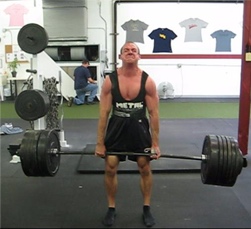
My business partner, Shane Rye, once dropped an amazing one liner with respect to injuries that has stuck with me for years now:
[bctt tweet="You have to listen when it whispers instead of waiting for it to yell."]
The concept is simple: if you ignore minor aches and pains, they rarely just magically go away. Rather, they usually get magnified by volume and intensity and eventually reach a painful threshold where are more extensive intervention is required. The research actually supports this concept - but only if you know how to dig a bit deeper.
As an example, consider this Scandinavian study of patellar tendinopathy in junior basketball players. Researchers looked at 134 teenagers (268 total patellar tendons) and found that only 19 tendons presented clinically with symptoms. However, under ultrasound examination, 22% of the remainder of the group (who'd said they've never had patellar tendon pain) could be diagnosed with tendinopathy. In other words, "ultrasonographic tendon abnormality is 3 times as common as clinical symptoms."
Now, keep in mind that this study looked at teenagers, who are markedly less likely to have tendinopathy than older individuals. Just imagine if they'd done this study on a cohort of middle-aged men playing hoops at the local YMCA. The point is that whether you have symptoms or not, you likely have some changes in your tissues.
To be clear, this isn't particularly shocking to anyone who's looked at MRIs of asymptomatic individuals. We see loads of asymptomatic rotator cuff tears, spondylolysis (stress fractures), and torn labrums. And, I don't think we should just treat MRI findings when they aren't aligned with clinical symptoms. However, they do provide a reminder that we often have several issues that might just be waiting to reach a painful threshold if we aren't cognizant of our training volume and intensity - and our movement quality.
I call these potential problems "whispers." Maybe it's that Achilles tendon that's cranky first thing in the morning, but feels good after you warm it up. Or, it's that stiff neck you get after a few hours of working at the computer, but feels better after your spouse massages your upper trap. It could be the shoulder that bugs you only when you barbell bench press, but feels pretty good when you use dumbbells instead. These whispers are all premonitions of an imminent training disaster - so listen to them.
Maybe it's seeking out some extra manual therapy in a specific area. The solution could be looking at a more individualized warm-up to address these issues. It might even be that you strategically drop particular exercises from your program at various points during the year.
Above all else, though, it's about understanding that good training teaches your body how to spread stress over multiple joints. Instead of that cranky patellar tendon taking on 90% of the load on each landing, we work on hip and ankle mobility and strength so that it might only have to be 30%. Spreading out the stress ensures that one area won't ever hit the point of pain.
Understanding how to distribute stress mandates that you understand what quality movement actually looks like, though - and that's unfortunately where a lot of fitness professionals fall short. With that in mind, many of my products focus on the topics of assessment and corrective exercise, so they're good options for bringing these knowledge gaps up to speed. In particular, I'd recommend the following ones.
Sturdy Shoulder Solutions - this is my most up-to-date upper extremity resource, and it delves into everything from the neck, to thoracic spine, to scapular control. I discuss functional anatomy and key competencies you need for upper extremity health and high performance.
Functional Stability Training - this four-part series is a collaborative effort with physical therapist Mike Reinold, and we cover core, upper body, lower body, and optimizing movement. The components can be purchased individually or as the entire package (at a big discount).
Sign-up Today for our FREE Newsletter and receive a four-part video series on how to deadlift!
It goes without saying that ankle mobility deficits are becoming more and more common these days. It may be because:
1. Modern footwear is atrocious, with elevated heels, high tops, and rigid sides
2. We carry our center of mass too far forward thanks to postural distortions that encompass anterior pelvic tilt and forward head posture (among other ramifications).
3. We never utilize extensive dorsiflexion in our daily lives, whether it's in a full squat or high-speed running.
Of course, it's usually a combination of all these factors. And, while we can try out minimalist sneakers to deal with problem #1 and tinker with our exercise program to work on problem #2, problem #3 is a bit more cumbersome, as many of these folks have anterior knee pain that is exacerbated with squatting, running, and ankle mobility exercises where the knee is driven in front of the toes, creating shear stress at the knee. In other words, this ankle mobility drill might be great for someone with healthy knees, but painful for someone with a history of knee pain.
Interestingly, if you consider the functional anatomy of the plantarflexors (calf muscles) while looking at this mobility exercise, you're really only putting the soleus on stretch. The gastrocnemius, actually crosses both the knee and ankle, working as a knee flexor and plantarflexor. So, while this drill may be "more functional" because it occurs in an upright position, it actually shortens the muscle at the knee as it lengthens it at the ankle. And, the more the knee tracks forward, the more symptoms those with knee pain will get.
To that end, if we think back to the functional anatomy lesson we just had, we can get the gastrocnemius to fully lengthen by combining knee extension with plantarflexion - which puts us in a great position that minimizes shear stress at the knee. Problem solved.
After someone has utilized this second drill for a while and minimized their symptoms, it can be progressed to a knee-break ankle mobilization, which still creates a bit of shear stress, but not nearly as much as the first video I showed. Because dorsiflexion is maxed out before knee flexion can occur, it seems - at least anecdotally - to reduce the discomfort that some folks feel.
Here are this week's random tips to get you headed in the right direction with your workout routine and nutrition program, with assistance from Cressey Performance strength and conditioning coach Greg Robins.
1. Take a preventative approach.
Often times nagging pain, injuries, and adverse health effects are an issue of negligence. It is is important as a coach, athlete, or weekend warrior to take a preventative approach to keeping your body healthy. There is no shortage of information on how to deal with various joint pain, or why its important to do "this" to prevent "that". At Cressey Performance, we take a preventive approach to keep our athletes on the field, but the ball doesn't stop there.
A common example is resistance training among older women to prevent bone degeneration. A recent study published in the European Journal of Applied Physiology found that younger women, in their mid twenties, who participated in a 12-week resistance training program showed significant increases in the hormones responsible for new bone growth. This isn't revolutionary, but the take home point is to promote heavy lifting long before signs of degeneration begin to present themselves.
Similarly, anterior knee pain is a hot topic with active individuals. This pain can be debilitating, especially as an athlete or someone with a more active job / lifestyle. Another recent study conducted at The University of Cincinnati found that an intervention with four daily close chained kinetic exercises among military recruits (undergoing rigorous training) greatly reduced incidents of knee pain when compared to a control group who did not. Military personnel underwent daily physical training for 3-4 hours per day, including endurance marching, military field exercises, running, weapons and foot drill, and strength and conditioning. If as little as four exercises were able to help these individuals, imagine what they can do for you.
2. Eat more fish - and preferably ones that did cool stuff like this while they were still alive.
3. Wear a pedometer for a day.
If you talk to a lot of people "in the know," non-exercise physical activity (NEPA) is an often overlooked factor contributing to fat loss success (or failure). Some people just move all the time, whether it's because of their occupation (e.g., manual laborer) or the simple fact that they are constantly fidgeting. It might surprise you, but this NEPA can really help get you lean - or keep you there.
One quick and easy way to get a feeling of where you stand on this front is to simply wear a pedometer for a day. I did this about two years ago and discovered that I actually walk about four miles in eight hours of coaching at Cressey Performance. That's a lot of calories burned!
Just like writing down everything you eat can force you to consider what you're putting in your mouth, wearing a pedometer can motivate you to take some extra steps each day. Give it a shot; you may be surprised at how many or few steps you take each day.
4. Count your blessings.
Being happy, and finding fulfillment in your life and training, can be as easy as remembering all that you already have. Stop stressing about what you don't have, and focus on the many things you do have. Take five minutes and write down everything you are grateful for. Every morning start your day by reading through your list, and add to it as you see fit. Doing so will give you a positive start to each day. Try it out!
5.Be more specific with your "conditioning."
The term conditioning is grossly misunderstood. The lack of understanding, in consideration of the demands of an individual within their chosen sports or activities, has led to many asinine training protocols developed by misinformed coaches and general people alike. An elite powerlifter may not be able to run a six-minute mile, but they are perfectly conditioned for their sport. Likewise, a baseball pitcher has no business doing extensive distance running when they a play a sport that involves covering as little as 100ft of total ground per outing (if that). More appropriately, they need to develop the energy systems conducive to producing explosive movements repetitively for the amount of time they spend on the mound. This will differ within the position as well: Starters, long relievers, closers, etc.
Using resources such as "time motion analysis" is a great place to investigate the actual demands placed on an athlete in a given sport. You can access A LOT of these through a basic google search. As a team sport coach, take a critical look at what you assign as "conditioning" work to your athletes during practice. In this day and age, many kids are participating in strength and conditioning programs outside of their practice and game schedules. Assuming that they are receiving intelligent programming, you do not want to interfere with their training by having them do additional work that is detrimental to their progress. Solutions: stop the ridiculous amounts of distance running and "suicides," and instead form a relationship with their strength and conditioning coach.
For you weekend warriors: Your approach to conditioning will be as specific as your main goal. Many general fitness people are kind of across the board on what they are trying to accomplish. With that in mind, try to keep a similar stimulus in your conditioning work to what the rest of your training for that day is. For example, place sprint work with adequate rest on heavy lifting days, place more aerobic work on off days, and include a day of high intense intervals with shorter rest later in the week after training.
Co-Author Greg Robins is strength and conditioning coach at Cressey Performance in Hudson, MA. Check out his website, www.GregTrainer.com, for more great content.
Sign-up Today for our FREE Newsletter and receive a four-part video series on how to deadlift!
I've written quite a bit in the past about how one should always interpret the results of diagnostic imaging (MRI, x-ray, etc.) very cautiously and alongside movement assessments and the symptoms one has. In case you missed them, here are some quick reads along these lines:
Preventing Lower Back Pain: Assuming is OkayWho Kneeds "Normal" Knees?Healthy Shoulders with Terrible MRIs?
While some of these studies stratified subjects into athletes and non-athlete controls, not surprisingly, all these studies utilized adult subjects exclusively. In other words, we're left wondering if we see the same kind of imaging abnormalities in asymptomatic teenage athletes, which is without a doubt our most "at-risk" population nowadays.
That is, of course, until this study came out: MRI of the knee joint in asymptomatic adolescent soccer players: a controlled study.
Researchers found that 64% of 14-15 year-old athletes had one or more knee MRI "abnormalities", whereas those in the control group (non-athletes), 32% had at least one "abnormality." Bone marrow edema presence was markedly higher in the soccer players (50%) than in the control group (3%).
Once again, we realize that just about everyone is "abnormal" - and that we really don't even know what "healthy" really is. So, we can't hang our hat exclusively on what a MRI or x-ray says (especially since we don't have the luxury of knowing with every client/athlete we train). What to do, then?
Hang your hat on movement first and foremost in an asymptomatic population. Do thorough assessments and nip inefficiencies in the bud before they become structural abnormalities that reach a painful threshold.
Sign-up Today for our FREE Newsletter and receive a detailed deadlift technique tutorial!
A few weeks ago, I came across this recent study of different ACL grafts. It found that there was no difference in follow-up success rates at two-year mark between hamstrings and patellar tendon grafts. The patellar tendon group did, however, exhibit more anterior knee pain – which isn’t a surprise because it’s not uncommon to see longer term tendinosis in athletes with patellar tendon grafts even after their “rehabilitation period” is over. That said, I would be interested to see what would happen if they:
a) evaluated those patellar tendon graft subjects who received soft tissue treatments as part of their rehabilitation versus those who didn’t (my experience says that the anterior knee pain goes away sooner when manual therapy is present) .
b) evaluated those who went to effective strength and conditioning programs immediately post-rehabilitation versus those who didn’t (my hunch would be that those who continued to activation/strengthen the posterior chain would have experienced less anterior knee pain).
c) looked at performance-based outcomes at ~12-18 months in the hamstrings group, as these folks have more “intereference” with a return to normal training because of the graft site (you want to strengthen the posterior chain, but can’t do that as soon if you are missing a chunk of the hamstrings). My experience has been that patellar tendon patients can do a lot more with their strength and conditioning program sooner than those who have hamstrings grafts.
It’s not to necessarily say that one is better than the other, as they both have their pros and cons – but I think this study potentially casts patellar tendon grafts in a less favorable light when the truth is that hamstrings grafts can have just as many complications down the road. Above all else, the best ACL grafts are the ones that the surgeon is the most comfortable using – so pick your surgeon and defer to his expertise.
As an interesting aside to this, I remember Kevin Wilk at an October 2008 seminar saying that 85% of ACL reconstructions in the U.S. are performed by doctors that do fewer than 10 ACL reconstructions per year. So, don’t just find a surgeon; find a surgeon that does these all the time and has built up a sample size large enough to know which ACL graft site is right for you, should you (unfortunately) ever “kneed” one (terrible pun, I know).
Related PostsWho "Kneeds" Normal Knees?An Intelligent Answer to a Dumb Question: A Review of "The Single-leg Solution"Sign-up Today for our FREE Newsletter:
I suppose this blog title is more of a rhetorical statement than an actual question, but I'm going to write it anyway.
Just about every week, I get someone who comes to Cressey Sports Performance - either as a new client, or as a one-time consultation from out of town - and they have some issue that is bugging them to the point that they opted to see a doctor about it. This doctor may have been a general practitioner or an actual sports orthopedist. In many cases, the response from this medical professional is the same "Just rest."
"It hurts when you lift? Then stop lifting."
Huh? When did COMPLETE rest because a viable recommendation?
In case folks haven't noticed, a scary number of Americans are overweight or obese. Even if rest was the absolute key to getting healthy, telling them to not move is like not seeing the forest through the trees. Your bum knee will feel better, but you'll have a heart attack at age 43 because you're 379 pounds.
Oh, and nevermind the fact that exercise generally improves sleep quality, mooed, and immune, endocrine, and digestive function. I'm not going to lie: I would rather have an achy lower back than be fat, chronically ill, sleep-deprived, impotent, angry, and constipated.
But you know what? The good news is that you can still exercise and avoid all these issues - regardless of symptoms. I can honestly say that in my entire career, I've never come across a single case who couldn't find some way to stay active.
And, when I did an internship in clinical exercise physiology, we trained pulmonary rehab patients in spite of the fact that they often had interruptions during their sessions to cough up phlegm for 2-3 minutes at a time.
All over the world, people are using exercise to rehabilitate themselves from strokes, heart attacks, spinal cord injuries - you name it.
However, Joe Average who sleeps on his shoulder funny and wakes up with a little stiffness needs complete rest and enough NSAIDs to make a liver cringe.
Sorry, but you're going to need to be on crutches, in a back brace, with poison ivy and a punctured lung to get my sympathy. And, you're sure as heck not going to get it if you're just "really sore" from your workout routine. Seriously, dude?
I don't care what your issue is: "just rest" is almost never the answer (a concussion would be an exception, FYI). When a health care practitioner says it, it's because he/she either a) doesn't have the time, intelligence, or network to be able to set you up for a situation where you can benefit from exercise or b) doesn't think you have enough self control to approach exercise in a fashion that doesn't make it more harm than good.
There is almost always something you can do to get better and maintain a training effect. While adequate rest for injured tissues is certainly part of the equation, it is just one piece in a more complex puzzle that almost always still affords people the benefits of exercise.
Sign up below for our FREE newsletter and receive four-part video series on how to deadlift!
I didn't do a "random thoughts" feature last week, so I'll have to be extra random this week to make up for it.
1. Bam!
You weren't expecting me to come out with such amazing humor, were you? Let that be a lesson to you; nobody is more random than EC (and nobody pulls off referring to himself in the third person better, either).
2. We all know that warm-ups are importance for enhancing power output, grooving appropriate neural patterns, and avoiding injury. Here is some cool research that demonstrates how much more effective an active warm-up is than a passive warm-up when it comes to metabolic responses to exercise. Namely, those who undergo an active warm-up demonstrate increased oxygen uptake and lower heart rate at a given workload than those participating in a passive warm-up (or no warm-up at all).
Anecdotally, I can tell you that there have been some days where I have felt like there was lead in my shoes and that there was no way I could get any interval training in on a day I'd planned to do so. However, after a good dynamic flexibility warm-up, things "miraculously" got a lot easier.
3. A big congratulations go out to CP baseball athletes Jordan Cote, who committed to Coastal Carolina, and Joe Napolitano, who committed to Wake Forest. Both made their decisions last week and were featured at ESPN Boston. We're proud of our boys!
4. Likewise, I've got to give a congratulations to CP athlete and Lincoln-Sudbury All-American soccer player Cole DeNormandie, who became the second CP athlete featured on the cover of ESPN Rise Magazine in just the past few months (he joins Vanderbilt-bound pitcher Tyler Beede):
5. Mike Robertson published a three part series on Knee Pain Basics this past week; it is absolutely fantastic and I'd strongly encourage you to check it out. Here are the links:
Part 1 - PhilosophyPart 2 - ProgrammingPart 3 - Coaching
Along these same lines, if you haven't checked out Mike's Bulletproof Knees Manual yet, I'd strongly encourage you to do so; it's an excellent resource.
6. Greg Robins recently came down to spend some time observing the madness at Cressey Performance, and wrote up a detailed review of his experience; check it out: Science and Attitude: My Trip to Cressey Performance.
7. Here is a link to a great blog from Bret Contreras; it's definitely worth a read: Sprint Research, Biomechanics, and Practical Implications - An Interview with Matt Brughelli.
8. I need some advice from the dog lovers out there. Both my fiancee and I grew up with dogs and are thinking about getting a puppy after our wedding (less than six weeks away right now). We both agree that we want something small - but at the same time, I'd like something that doesn't make me want to instantly turn in my man card, like the silky poo for which she is currently pushing:
I actually really like bulldogs, but that's going to be a tough sell for her unless it's a "hybrid" where you can't see a whole lot of bulldog. Plus, I know a lot of people have said that they have a higher propensity for health issues. I like puggles, mini pincers, and a few others, but what do those of you in-the-know suggest? Thanks for any help you can offer!
Please enter your email below to sign up for our FREE newsletter.
Okay, this subject line was undoubtedly the worst of all time, but I promise that the information that follows will be worth reading.
A lot of you were probably hoping that you were out of the woods after I told you how bad your lower backs and shoulders look on diagnostic imaging such as MRIs. I'm sorry to say that these "normal" structural disasters also apply to the knees.
A 2010 review from Flanigan et al. looked at studies that collectively examined the (1,862) knees of 931 athletes (40% of whom were professional athletes) using MRI and arthroscopy. They found that 36% of these knees had full-thickness chondral defects, but 14% of these subjects had no symptoms when diagnosed. The researchers concluded that "Over one-half of asymptomatic athletes have a full-thickness defect."
Years earlier, Cook et al. screened 134 elite junior basketball players (268 total knees) for patellar tendinopathy. At the time, only 19 (7%) of the 268 tendons presented with symptoms (pain) of tendinopathy. Interestingly, though, under diagnosis with ultrasound, researchers actually found that 26% of all the tendons could be labeled tendinopathy based on the degenerative changes observed. In other words, for every one that actually presents clinically with symptoms, more than three more go undiagnosed because people either haven't reached threshold, or they move well enough to keep symptoms at bay. Or they are Kurt Rambis and can just look so awkward that nobody even pays attention to their knee sleeve.
On the "move well enough" side of things, check out this study from Edwards et al. They showed that these athletes with asymptomatic patellar tendinopathy actually land differently - both in terms of muscle recruitment and sequencing - than asymptomatic athletes without tendinopathy. Fix that movement pattern neurally and strengthen the right muscles, and those issues never reach threshold. Leave it alone, and they'll be presenting with knee pain sooner than later. Mike Robertson does a great job of outlining ways to improve knee health via movement retraining in his Bulletproof Knees Manual.
This is just the tip of the iceberg. You'll see loads of chronic ACL and meniscus tears that folks never realize they have. I could go on and on. The take-home messages? Yet again, diagnostic imaging is just one piece of the puzzle, and how you move is far more important.
Related PostsThe Importance of Ankle MobilityHealthy Knees, Steady Progress
About a year ago, Mike Robertson came out with an outstanding product, The Single-Leg Solution - and it reminded me of an experience I once had at a seminar. A guy posed the following question to a panel of speakers in which I was included:
"If you could only choose one exercise to do, what would it be?"
We all agreed that it was a pretty stupid and unrealistic question, but reluctantly, we each answered. In spite of my distaste for the question, I responded without hesitation: "Lunges - or any single-leg exercise, for that matter."
In my eyes, single-leg work really is that valuable - and for a lot of reasons.
(Gold star to none other than me for thinking of up the title for him. Booyeah.)
So why is single-leg work the best thing since sliced bread?
First, there is obviously going to be some direct carryover to the functional demands of life and athletics, as we spend most of our life on one foot in one capacity or another. Muscular recruitment patterns are different for bilateral and unilateral exercises, so in terms of specificity, single-leg work really can't be beat.
Second, it's much more lower-back friendly, as you can load single-leg exercises appreciably without axial loading. And, to take it a step further, it is easier to maintain neutral spine (and avoid lumbar flexion with compressive loading) with a split-stance - regardless of whether you axially load or hold the weights in the hands at one's sides. Simply stated, while single-leg exercises will never (at least in my eyes) take the place of squatting and deadlifting, they are absolutely essential supplemental exercises for one's training repertoire.
Third, in the case of back pain (or hip pain, with femoroacetebular impingement being an example), they're hugely helpful in allowing one to maintain a training effect in spite of whatever pain is present.
Fourth, single-leg exercises are hard. Let's face it: most people exercise like pansies and pick the exercises they like the most, not the ones that they need the most - or the ones that are the hardest. This is 225 pounds for eight pretty effortless reps, which makes girls want him and guys want to be him (or something like that).
Fifth, Robertson insists they are good, and this guy knows as much about knees as anyone I've ever met. If you want to keep your wheels strong and healthy for the long-term, including them is a no-brainer.
This is just five reasons to include single-leg work in your programming, and frankly, Mike includes a heck of a lot more in the 96-page tag-along manual that accompanies the 60-minute DVD in The Single-Leg Solution Package.
Knowing that single-leg work is important isn't enough, though, as I see exercise enthusiasts and fitness professionals alike absolutely butchering the technique on these exercises. And, they have absolutely no rhyme or reason for the "who, what, when, where, why" they include them; it is just throwing a wad of turd on the wall to see what sticks. Optimal progress is dependent on population-specific exercise selection, pristine technical execution, and pinpoint exercise progressions - and this is where Mike really shines with this product.
So, whether you're a personal trainer, bodybuilder, powerlifter, runner with knee pain, desk jockey with a bad back, or just some random dude who wants to get stronger, move better, and be just a little more awesome, I'd highly encourage you to check out The Single-Leg Solution..
Sign-up Today for our FREE Newsletter and receive a deadlift technique tutorial!
Here are some reading recommendations for the week:
Q&A: Partial Knee Meniscectomy - Here is a great blog from Mike Robertson about training modifications for those who have had a portion of the meniscus removed. Mike's a brilliant knee guy (definitely check out Bulletproof Knees if you haven't already). Stick around Mike's site and read a bit; he's been kicking out some great content lately.
Are You Inflamed? - This is a good one on the nutrition side of things from Mike Roussell.
What Makes Roy Run? - This was an awesome article about Roy Halladay from a few weeks ago in Sports Illustrated. To be blunt, a ton of professional baseball pitchers are lazy, one-trick ponies who rely on natural talent and don't work hard to fulfill their potential. Halladay is an exception to that rule: a guy who has worked incredibly hard to become arguably the best pitcher in the game. This is a tremendously well-written and entertaining piece about the path he took and how he deserves every bit of success that comes his way. Phillies fans are lucky to have him.