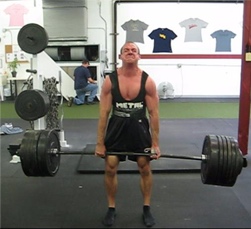
We’re excited to announce that on Monday, September 23, we’ll be hosting our fourth CSP Business-Building Mentorship, a day of learning with Pete Dupuis and me. This event will take place at our Hudson, MA location the day after our annual fall seminar. Pete and I have spent nearly a decade crafting the operational systems and strategies that fuel CSP today, and we’re excited to pull back the curtain for fellow gym owners.
It is our intention to foster an environment conducive to learning and the exchanging of ideas, so we will be limiting participation to 30 individuals.
Here’s a look at our agenda for the day:
8:30am: Registration & Coffee
Morning Session – Lead Generation & Conversion
9:00am – 9:30am: Introduction: The Four Pillars of Fitness Business Success
9:30am – 10:30am: Lead Generation: Strategic Relationship Development, Identifying & Connecting with Opinion Leaders, Social Media Strategies
10:30am - 11:00am: Q&A
11:00am - 12:00pm: Lead Conversion: CSP Selling Strategy & Methodology
12:00pm - 1:00pm: Lunch (provided)
Afternoon Session – Business Operations & Long-Term Planning
We’re excited to announce that on Monday, October 15, we’ll be hosting our second CSP Business-Building Mentorship, a day of learning with Pete Dupuis and me. This event will take place at our Hudson, MA location the day after our annual fall seminar. Pete and I have spent nearly a decade crafting the operational systems and strategies that fuel CSP today, and we’re excited to pull back the curtain for fellow gym owners.
It is our intention to foster an environment conducive to learning and the exchanging of ideas, so we will be limiting participation to 25 individuals.
Here’s a look at our agenda for the day:
8:30am: Registration & Coffee
Morning Session – Lead Generation & Conversion
09:00am – 09:30am: Introduction: The Four Pillars of Fitness Business Success
09:30am – 10:30am: Lead Generation: Strategic Relationship Development, Identifying & Connecting with Opinion Leaders, Social Media Strategies
10:30am - 11:00am: Q&A
11:00am - 12:00pm: Lead Conversion: CSP Selling Strategy & Methodology
12:00pm - 01:00pm: Lunch (provided)
Afternoon Session – Business Operations & Long-Term Planning
It's been a while since I posted a new installment on this series, so here are two thoughts that have been rattling around my brain on the business side of fitness.
1. It takes time and many exposures to build top of mind awareness and, more importantly, trust.
I had a chat with one of our free agent minor league baseball players a few weeks ago. He moved down from New Jersey a few months ago to train with us all offseason.
Two years ago, his agent encouraged him to check Cressey Sports Performance out. He didn’t act.
Then, he played with one of our guys in independent ball and again heard our name, but didn’t follow up on it.
Later, he heard my name mentioned twice on the Tim Ferriss Podcast. While intrigued, he still didn’t act.
Then, last summer, he read the New York Times article about our work with Noah Syndergaard, and he finally reached out.
Top of mind awareness isn’t enough anymore. People need to know, like, and trust you. And it takes longer than ever to get to that trust point. I recall hearing that the law of repeated exposures used to be seven interactions with a marketing message. Now, it’s probably a lot more.
If you want to be perceived as a go-to expert in your chosen field, it’s not just enough to do a good job. People need to be made aware that you’re doing a good job from a number of different angles; you have to make your expertise easier to perceive.
2. Don’t compare apples and oranges in the fitness industry (or any industry, for that matter).
As you probably know, we have Cressey Sports Performance facilities in both Hudson, MA and Jupiter, FL. The systems and overarching approach to coaching are very comparable – especially because I spend part of the year at both locations – but there are actually many differences between the two facilities.
Our professional baseball clientele comprises a larger portion of our yearly revenues in Florida, whereas Massachusetts derives more from high school athletes (especially because the high school offseason is longer in a warm weather climate).
Our Massachusetts facility is larger because we have to do more throwing and sprinting inside during the winter. Conversely, Florida weather allows us to do more of this work outside.
We have different staff members at each location. They have unique expertise and personalities.
CSP-MA opened in 2007, and CSP-FL opened in 2014. Massachusetts is a more “mature” business, which gives us a better picture of norms that allow us to compare how things are progressing from year to year.
I could go on and on about the difference, but the important takeaway is that if I sometimes struggle to compare two facilities with virtually the same name and training philosophy, why should you ever compare yourself to another gym?
What Mark Fisher Fitness has to pay for rent in New York City far exceeds what a personal trainer with a small studio in Alabama would have to pay.
Ben Bruno can train a lot more celebrities in Hollywood than a trainer can in North Dakota.
Gross revenues for a giant commercial gym in San Francisco are going to be substantially higher than what a semi-private operation in Minnesota can take in. Meanwhile, the owner of the MN facility might actually make more money and sleep better at night than the owner of the big box gym.
The point is to have a filter when you look at all the “success” you see around you in the fitness industry. There are gyms grossing millions of dollars that are scraping to get by, and others that only do a small fraction of that amount while having a huge community impact – and allowing a fitness entrepreneur to live the life he wants.
Just like you would never encourage your clients to compare themselves to other clients, supermodels, or professional athletes, you shouldn’t compare yourself to any other trainer, business, or facility. All that matters is that when you compare yourself to what you were days, weeks, months, and years before, you’ve progressed.
Sign-up Today for our FREE Newsletter and receive a four-part video series on how to deadlift!
Happy New Year! Thanks for your support of EricCressey.com in 2017. I've got some great things in store for 2018. Let's kick it off with some content from around the 'net.
For the most part, you can throw "sport-specific" out the window in an untrained population. The basic movement and strength foundation - squat, hinge, lunge, push, pull - is pretty universal for all sports.
I'm long overdue for a new installment on this series, so here are some thoughts that have been rattling around my brain on the business side of fitness.
1. Unique skill sets help you fill in the cracks.
I'm going to let you in on a little secret: most of the strength and conditioning resumes that come across my desk are painfully similar. Seriously, they are 90% the same. Here's an excerpt from a presentation I gave earlier this year when I touched on the topic:
As you can probably infer, experience like this is really abundant - and what is abundant is rarely coveted. I'm not saying any of things are bad to have on a resume; I'm just saying that they're prerequisites, not differentiating factors.
So how does an up-and-coming strength and conditioning professional stand out from the crowd? Here are a few examples:
a. Fluency in another language (Spanish is incredibly useful at CSP, where we train quite a few bilingual baseball players)
b.Technology proficiency beyond the "norms" (I can't tell you how many times long-time CSP employee Chris Howard has helped out with everything from Powerpoint issues to wiring speakers)
c. A demonstrated history of lead generation and conversion (Have you built and grown a business? Have you found value where others missed it?)
d. An internship at an established facility (I'm going to look more fondly on someone who's interned at IFAST, Mike Boyles, EXOS, or something comparable - as opposed to the person who chose a random YMCA on the other side of the country)
e. Playing AND coaching baseball (have you seen it from both sides of the lens?)
The possibilities are endless, but the point is that these unique skill sets are differentiating factors that make it easier for someone to justify hiring you.
2. Your bio is probably more important than you think.
Most of the time, when someone posts their bio on a website, it's to make sure that prospective clients review it and recognize two things:
a. This person is qualified (Allison graduated from XYZ university with ABC degree, and has achieved these certifications)
b. This person is relatable (In his spare time, Doug enjoys walking his two pet schnauzers and eating ice cream with his wife of 27 years, Peggy.)
An experience the other night reminded me that it's important to give equal attention to each.
Just tried to "vet" a rehab specialist for a pro athlete. Read his bio & ALL it said was that he did ART, was a father of three, & competed in triathlons. Couldn't tell if he was a PT, DC, or ATC. A bio does matter; if you want referrals, make it easy to perceive your expertise.
This guy lost out on a pretty big time client because he focused too much on being relatable; almost his entire bio was targeted toward potential patients, but not other practitioners who might be looking to evaluate his clinical skill set for the purpose of referrals.
When you write your bio, make sure you include components of both - and that might mean you have to trim the fat on some of the non-essentials.
3. Slow and steady still wins the race.
Have you ever heard the story of the small company who gets a big breakthrough to get their product on the shelves of Wal-Mart or Target - and then goes out of business just months later because they didn't have the short-term cash flow to keep up with a huge surge in production demands and inventory needs? Their systems couldn't keep up with their lead generation.
Many trainers would kill to add 20 new clients, but most fail to realize that they don't have the systems in place to take on that many new people and still deliver a high quality product. This is a classic story when a fitness bootcamp runs a Groupon to bring in a surge of new prospects - only to see their long-term members get irritated at crowded classes, watered down programming, and "flightly" training partners who go from one gym to the next each month. The systems weren't ready for the surge in leads.
Last summer, my business partner, Brian Kaplan, co-founded The Collegiate League of the Palm Beaches near our Jupiter, FL Cressey Sports Performance location.
In a matter of weeks, we added over 60 new college baseball players as 3-5 days/week clients for a two-month period. It took months of planning to make sure that we were staffed accordingly, and included loads of email outreach to schedule evaluations. It even meant that there were a few cases when we had to turn away "drop-in" evaluations from college guys who hadn't scheduled in advance. I even flew down from Massachusetts for a week to help out with the initial surge.
As Aaron Ross and Jason Lemkin wrote in From Impossible to Inevitable, "Speeding up growth creates more problems than it solves." It only makes sense that this would be a huge issue in the fitness industry, where we have people who are often skilled technicians, but not very savvy entrepreneurs and managers. So, unless you have your systems fine-tuned, be careful what you wish for when it comes to expanding your offering to new markets or within the existing market.
4. Read this post from my business partner, Pete Dupuis.
This is an excellent lesson that can apply to any endeavor in business and in life.
Back in my graduate school days, I did some personal training at a gym not far from campus. My days were filled with work in the human performance lab and varsity weight rooms, but I felt like it was really important that I continued to train general fitness clients to become more proficient in that demographic – and help pay the bills.
Like most guys in my early 20s, I thought I had life all figured out. A few months in, my boss informed me that I was due for a performance review. She also mentioned that they were deviating from the “norm” a bit, and that my sit-down meeting would not be with her, but rather, with one of the more experienced trainers, Kris. I didn’t really think anything of it, and the meeting was scheduled for the following week.
Looking back, that meeting was profoundly impactful for me, even if I didn’t fully grasp just how important it was at the time.
Kris first complimented me on what I did well: work ethic, passion, attention to detail, coaching, and book smarts. Looking back, it was a perfect Dale Carnegie approach before I’d ever even read How to Win Friends and Influence People. Eventually, though, the conversation delved into the topic of empathy; she asked me what I thought most of my clients really wanted to get out of their personal training with me.
Here I was, a 22-year-old aspiring powerlifter who thought the world was out to train for a 600lb deadlift and get to 200 pounds at 6% body fat. My most loyal client, though, was a 68-year-old accountant who just didn’t want his neck and shoulder to hurt when he worked out and picked up his grandkids. Another was an elderly woman who was far more concerned about her risk of osteoporosis than her vertical jump.
That day, without telling me I sucked at relating to my clients, Kris taught me a ton about empathy and separating myself from personal biases. She just tactfully challenged me with a simple question. It wasn’t much different than the “guided discovery” approach we use with young athletes when we walk them into a little technique failure so that they can appreciate the wrong pattern.
“Where did you feel that?”
“Can you stop rowing when your elbow hits my hand?”
“See how your nose got to the floor before your chest on that push-up? Can you switch that up?”
Kris saw exactly what I needed to become a better coach, and she delivered the message perfectly. In hindsight, that lesson in empathy and separating myself from personal biases probably made a huge difference in enabling me to be successful in training baseball players even though I wasn’t a baseball player past eighth grade. I had to do a lot more listening and ask a lot more questions. Kris understood this all too well – and modeled it, too: she’d had clients for over a decade!
That was 2003. Now, 14 years later, Kris and I are still good friends. She sent us gifts when our twins were born. I help out with training her son, an up-and-coming pitcher. Of any of my co-workers at that time, she challenged me the most – and she’s the only one with whom I really keep in touch. How is that for impactful?
I actually reached out to her before posting this blog, and her response included the following:
"I remember this conversation well. I dreaded giving this performance review! I remember thinking that I knew how smart you were (probably smarter than I) and I knew that this trainer job was ultimately not your end point. I wanted to make sure you knew how valuable your knowledge was when applied correctly. How do you tell someone their delivery is not as sensitive as it needs to be??
"I'm so glad that I succeeded in my message and that this lesson has stayed with you. I am honored that you, who I respect immensely, learned something from me. You never really know how much you can impact a person's behavior and thought process."
Now, imagine she’d never spoken up. Or, even worse, if she had – but I wasn’t ready to accept that constructive criticism. I wouldn’t be the coach (or person) I am today. This is why we should be massively grateful to those who not only have constructive criticism to offer, but choose to provide it with the correct approach.
Hardest athlete to coach is often the one who's never struggled. Getting punched in mouth for 1st time teaches open-mindedness & work ethic.
When it really comes down to it, people struggle or fail to improve for one of three reasons.
a) They don’t know what they’re doing incorrectly.
b) They don’t have actionable strategies to address these issues; don’t understand how to employ these strategies; or haven't had enough consistency or success with these strategies.
c) They aren’t willing to change.
In terms of A, it’s important to challenge people tactfully and make them aware of their blind spots. Particularly in the youth sports realm, this is getting to be a very dicey situation. Many kids think they have it all figured out, and more concerning, many parents think coaches “have it in” for their kids, so they block constructive criticism. If we protect kids from understanding their weaknesses, they don’t grow. If we challenge kids, let them know failure isn’t a big deal, and then provide strategies to improve, they thrive. It’s been demonstrated in motor learning research, the educational realm, and social settings. As has often been said, “the success is in the struggle.”
Conversely, some people need help with B. This is the kid who is always late for practice, or always misses breakfast because he oversleeps. He needs time management strategies, and people around him to whom he can be accountable.
Scenario C is far and away the most challenging dynamic. These are situations where you may actually cheer against someone in hopes that they’ll struggle mightily and come to their senses on what needs to change. In an athletic context, it’s usually the kid who is the best player in the history of his town even though he eats fast food at every meal, skips training sessions, and stays up all night. It’s just a matter of time until he runs into genetically gifted competition that is far more prepared and motivated than he is.
Aroldis Chapman throws 105mph – harder than anyone in baseball history – and he has a 4.12 ERA this year. Mike Trout struck out three times in a game earlier this year. Ultimately, no matter who you are, sports and life will humble you in some capacity. Athletes are better off learning these struggles at a young age so that they’ll have strategies for dealing with them for the decades that follow.
What are the take-home messages?
1. Always be open to constructive criticism. In fact, seek it out. You can’t see your blind spots like others can.
2. Don’t protect your kid from constructive criticism, or immediately discredit criticisms of you. Process them before reacting. And remember the person delivering the criticism may actually be really nervous about doing so.
3. If you deliver constructive criticism, be cognizant of matching your approach to the personality of the one who’s receiving it.
4. Always reiterate that failure is part of life and not a big deal. And, if it seems like a big deal – particularly with young athletes – find ways to minimize consequences.
5. If you know why you’re struggling, find and employ strategies to address your weaknesses.
6. Thank you, Kris!
Sign-up Today for our FREE Newsletter and receive a four-part video series on how to deadlift!
When they were still in diapers, my 2-year-old daughters would always request the ones with "Big Bird" on them. The images on the diaper didn't change how effective it was at doing its job, of course.
And, if the paper towels didn't have a picture of Olaf from "Frozen" on them, a temper tantrum might very well occur - even if any regular ol' paper towel would've gotten the job done just as well.
They adored the Mickey Mouse sippy cups my mother bought them even though they weren't any better at delivering the beverage than a generic cup.
All of these are perfect examples of Brandscaping, a concept to which I was introduced by Andrew Davis in his outstanding book by the same name.
In its simplest form, brandscaping is an approach to developing partnerships with other brands who also cater to your target market. Davis spends considerable time discussing how Tony Bennett's resurgence in the past decade has a lot to do with joint ventures with Lady Gaga and the Muppets; they've modernized his classic approach to create a new synergy.
As an more applicable fitness industry example, Cressey Sports Performance (baseball strength and conditioning) and New Balance (baseball training apparel and shoes) are a great synergistic fit - and it even led to a limited edition training sneaker.
Referrals to and from physical therapists are another example, and the list could go on to include pitching instructors, massage therapists, meal preparation services, and a host of other complementary services. If we look at the classic "here's how you can grow your business," brandscaping is likely the single-best way to grow the "same product, new market" component. Your brandscaping partner recognizes your specific expertise/offering and brings new folks to it. You, in turn, do the same for them. Everybody wins.
Unfortunately, though, a lot of fitness professionals get in their own way and "obstruct" opportunities for brandscaping. A big mistake is definitely trying to be everything to everyone. If you're training everyone from cardiac rehab patients, to fitness competitors, to basketball players, to powerlifters, chances are that potential partners are going to struggle to see the specific realm in which you'd be a good partner. When you have a really broad collection of offerings, it's a challenge to market to them. The cardiac rehab patients might hate the internet, the fitness competitors love Instagram, the basketball players are on Twitter, and the powerlifters are on Facebook.
Moreover, some fitness professionals mismanage their web presence, even if they have a specific, marketable niche. As an example, if you train high school athletes, but a huge majority of your social media posts are about beer and partying, that's going to be a huge turnoff to their parents (who pay the bills). And, if you're a rockstar when it comes to training middle aged corporate executives, they're likely going to be turned off if all your social media content is shirtless photos of you from your recreational bodybuilding hobby.
In wrapping up, there are really three huge takeaways for you as you try to grow your business.
First, someone else has your ideal customers. Think about how you can partner with them in a mutually benefical relationship.
Second, your ideal customers or brandscaping partners might not be able to appreciate how good a cross-referral or co-banding relationship with you could be because you keep getting in your way. Think about the image you're creating publicly for your business or brand.
Third, don't let your daughters boss you around like mine do to me.
While we're on the topic of the business of fitness, I wanted to give you a heads-up that my business partner, Pete Dupuis, and I will be offering our Cressey Sports Performance Business Building Mentorship in an online format for the first time. This offering will take place September 22-24. For more information, click here.
Sign-up Today for our FREE Newsletter and receive a four-part video series on how to deadlift!
Those are the exact words I spoke in casual conversation over dinner on a first date on April 22, 2007.
82 days later I co-founded a gym. When we first moved in, it looked like this.
And, 727 days after that conversation, I proposed to the woman across the table from me.
That gym turns ten years old this week - and looks like this.
We even opened a second gym 1,500 miles away in Jupiter, FL in 2014. Also along the way, I started my consulting company and my wife opened her optometry practice – so we actually have four businesses.
This October, Anna and I celebrate seven years of marriage. We have two-year-old twin daughters. She even still likes baseball enough to be my "date" at the All-Star Game.
Suffice it to say that – in light of my own personal experiences – I think it’s silly to expect anyone to have a “10-year-plan.” I couldn’t even have a ten month plan. Usually, when my wife asks me what I want for dinner, I stumble all over my words; I often don't even have a ten hour plan.
And, I can tell you that we sure as heck didn’t know much about entrepreneurship. If you need proof, my business partner, Pete, and I wrote our business plan on a napkin at Applebees. The truth is that we kind of got lucky and were smart enough to figure things out as we went. I guess you could say that CSP's success has really been reflective of the old quote, "Luck is where preparation meets opportunity."
This blog could go in a lot of different ways from here.
I could list out a bunch of different business lessons I’ve learned – and I’ve definitely learned a ton.
I could talk about all the things I love about my “job” – and encourage you to go start your own gym.
I could talk about all the things that drive me bonkers at my job – and do my best to talk you out of opening one.
Instead, though, I’ll just end it with a heartfelt thank you. Everyone who reads this blog – whether you’ve actually stepped foot in a Cressey Sports Performance facility, purchased one of my products, or attended a seminar with us – has had an immeasurable impact on us getting to this day. To my family, co-founders, staff, friends, mentors, customers, and suppliers: I appreciate you all tremendously, and the truth is that we are most "lucky" to have so many great people supporting us.
I hope to be writing another one of these posts when we get to Year 20, but I’m afraid I don’t have a great track record with ten-year plans. I guess you’ll have to stay tuned.
In the meantime, though, I'm going to use the next few days to write up some lessons we've learned over the course of decade of fitness business entrepreneurship. I'll roll multiple posts out per day, so be sure to check back regularly.
Sign-up Today for our FREE Newsletter and receive a four-part video series on how to deadlift!
I have written several times in the past about how whenever the time comes to expand our staff at Cressey Sports Performance, we only hire from our internship program. In hiring, the goal is to get someone who is both competent for the job and a good fit for your culture. We can teach that competency in an internship, but just as importantly, an internship give us 3-5 months to evaluate whether an individual is the right fit from a personality standpoint. We actively involve our current staff in hiring to make sure that they're the ones helping to shape this culture. I can't recall exactly, but I believe I initially heard the competency/fit discussion in a book from Richard Branson and his hiring practices at Virgin.
This is an important lesson for all businesses, but particularly in the fitness industry. Many of your clients aren't intrinsically motivated to exercise; they probably don't get as excited about rolling out of bed and getting to the gym as us fitness nerds do. Rather, they may be more extrinsically motivated by a gym culture that makes exercise more palatable or even fun. If you hire someone who hurts your culture because they aren't a good fit in one way or other, your clients suffer.
What fitness professionals might not realize, however, is that the competency and fit consideration is also something that potential clients are considering in their mind (whether they recognize it or not) before they hire a trainer.
As an example, I am not a good fit if you are a ballerina. I might have all the knowledge that you need for a successful the design training program, but I don't look the part, nor can I speak the language.
Likewise, if I weighed 350 pounds and looked like an NFL offense lineman, I probably wouldn't be a good fit for the baseball players I train. The giant meathead persona actually turns a ton of them off. No matter how confident you are, being a bad fit overshadows that intellectual preparation.
I also wouldn't be a good fit at Mark Fisher Fitness. My personality isn't theatrical enough, and I'm not the most creative or extroverted guy in the world. My skill set really wouldn't translate, especially since a lot of Broadway performers aren't really interested in throwing a baseball 95mph.
"Fit" was something I had to overcome in my initial work with baseball players. Because I only played up until 8th grade, I had to ask a lot more questions and do a lot more listening. I had to strap on the catcher's gear and catch bullpens. And, I had to work harder to become wildly competent on the actual training side to overcome the fact that I'm technically a baseball outsider. It's worked out well, but I often wonder if success would have come a bit more easily if I'd be a guy who played baseball all the way through college.
I think "fit" is also the area where many fitness professionals really struggle as they work to market themselves. The accomplished bodybuilder who wants to attract general population fat loss clients may have all the knowledge needed to be successful, but if he plasters his website with shirtless pictures of himself, he comes across as a "me guy" who could never understand the needs of a 45-year-old mother of two. And he might not realize this "look" terrifies some of those potential clients - even though this marketing pitch might work if he's trying to add other bodybuilders or fitness competitors as clients.
Likewise, a guy who loses 300 pounds to get to a fit 180 pounds might appeal to this more-easily-intimidated demongraphic, but not be a good fit at all for the competitive bodybuilder. Everyone has different wants, needs, and perceptions.
This quick observation has three key takeaways:
1. Competence is always of paramount importance, but it will be hard to show off your competence if you aren't a good fit.
2. We all have huge blind spots of which we aren't aware. Just as you strive to always work to improve your knowledge base and skill set, you should actively seek out people you trust to give you honest feedback about how they view your marketing message and how you present yourself.
3. This might be the most important thing: you will never, ever, ever, ever, ever be a good fit for everyone. If you try to be everything to everyone, you'll wind up trying to ride a bunch of horses with one saddle. Having a few clearly defined "niches" usually is your best bet, and if you choose to expand into other niches, you're probably better off hiring someone who's a good fit for it. As I've said before, when it comes to long-term business development, look at this chart - and always try to trend down and to the right.
Sign-up Today for our FREE Newsletter and receive a four-part video series on how to deadlift!
I hope you're all having a great week. I'm a few days late with posting this because we were a bit more content heavy earlier in the week, but the good news is that it gave me a few more days to round up some excellent content for you.
Kabuki Strength Chat with Eric Cressey - I joined Chris Duffin and the rest of the Kabuki Strength crew for a podcast last week. We talked baseball strength and conditioning, business development, and fitness industry trends. Check it out!
STEM-Talk with Dr. Stuart McGill - Any podcast with Stu is a must-listen podcast! This one doesn't disappoint - and I particularly enjoyed his commentary on the flawed medical model as it relates to treating lower back pain.
It Took Me 10 Years to Become an Overnight Success- This was an excellent post from my business partner, Pete Dupuis. He shares some awesome insights on little things that can lead to long-term success - if you're patient.
Top Tweet of the Week
BSP: "Sleep deprivation for a single night will lead to a reduction in calorie output by 5-20% the subsequent day."